What is a quilted jacket? At its most basic, it is a lightweight outerwear piece made from two layers of fabric stitched together with insulation in between. The stitching creates a distinctive pattern (often diamond or grid shapes) that gives the jacket its name.
But a quilted jacket is more than just a clever construction. It is one of the most versatile pieces you can own.
It sits comfortably between a heavy winter coat and a light spring jacket. It is warm enough for cool days, light enough to layer under a heavier coat, and stylish enough to wear to the office or on the weekend.
The growing appeal of quilted jackets is backed by real market demand. According to the Research Intelo report, the global Kantha quilt jacket market was valued at USD 480 million in 2024 and is projected to reach USD 1.12 billion by 2033, growing at 9.8% CAGR, highlighting rising demand for quilted outdoor styles.
The global quilted jacket market is expanding rapidly, driven by consumers seeking lightweight, functional outerwear that does not sacrifice style.
This guide covers what a quilted jacket is, how it is made, how it compares to other jackets, styling tips, and whether it is the right choice for your wardrobe.
What Is a Quilted Jacket?
A quilted jacket is a padded outer garment with a stitched, diamond-patterned or grid design.
The quilting process involves sewing together two layers of fabric with an insulating material sandwiched between them. The stitching creates small, enclosed compartments that trap air and body heat, keeping you warm without the bulk.
The quilting pattern is not just decorative. It prevents the insulation from shifting or clumping, ensuring even warmth across the jacket. The most common patterns are diamond and horizontal channel quilting, though other geometric designs exist.
Quilted jackets are typically lightweight, making them ideal for transitional weather, layering, and everyday wear. They are often made from cotton, polyester, or nylon, with synthetic insulation such as polyester fill.
How Quilted Jackets Are Made
The construction of a quilted jacket is what sets it apart from other outerwear.
- The quilting process: The jacket is constructed by layering the outer fabric, insulation, and an inner lining. These layers are then stitched together in a pattern. The stitching creates pockets that hold the insulation in place. This prevents the fill from shifting or bunching, which would create cold spots.
- Insulation types: Most quilted jackets use synthetic insulation, such as polyester, that retains warmth even when damp. Some premium versions use down for a superior warmth-to-weight ratio. The amount and quality of insulation determine the jacket’s warmth.
- Outer fabric materials: The outer shell is often cotton, polyester, or nylon. Cotton offers breathability and a classic look. Polyester and nylon are more durable and water-resistant. Some jackets feature a water-repellent finish for added protection.
- Patterns: Diamond quilting is the most iconic and recognised pattern. Horizontal or vertical channel quilting offers a more minimalist aesthetic. The pattern affects both the jacket’s appearance and its flexibility.
Key Features of a Quilted Jacket
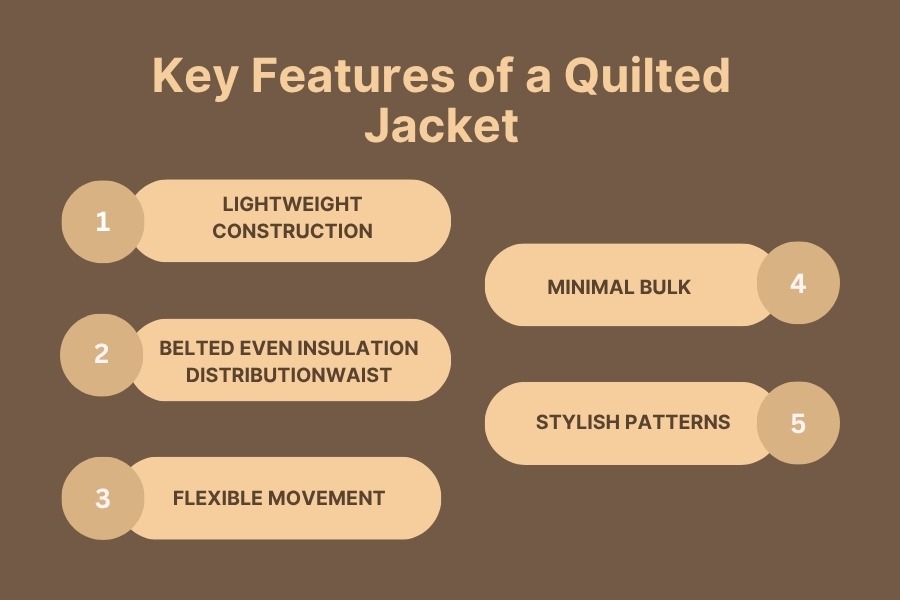
Quilted jackets are defined by several distinctive features that contribute to their popularity.
- Lightweight construction: Unlike heavy winter coats, quilted jackets are surprisingly light. This makes them comfortable for all-day wear and easy to pack or carry when not in use.
- Even insulation distribution: The quilting pattern prevents insulation from clumping, ensuring consistent warmth throughout the jacket.
- Flexible movement: The stitched design allows the jacket to move with your body, making it ideal for active use and layering.
- Minimal bulk: You get warmth without the bulk of a traditional padded jacket. This is why quilted jackets are popular for commuting and travel.
- Stylish patterns: The diamond or grid stitching adds visual interest, elevating the jacket beyond basic outerwear.
Quilted Jacket vs Puffer Jacket: What’s the Difference?
This is one of the most common questions. The answer comes down to construction and purpose.
A puffer jacket is heavily padded with thick insulation, often down or a high-loft synthetic fill. It is designed for maximum warmth in extreme cold. The baffles are typically larger and more pronounced. This creates a bulkier, more voluminous silhouette.
A quilted jacket is lighter, less bulky, and more streamlined. The quilting is tighter and the insulation is thinner. It is designed for mild to moderate cold, not extreme winter weather.
Wear-tests show that quilted jackets offer better mobility and cleaner silhouettes, making them ideal for urban commuting, office wear, and daily layering, while puffers dominate harsh-winter, activity-focused use-cases where maximum warmth outweighs style.
Feature Quilted Jacket Puffer Jacket
| Feature | Quilted Jacket | Puffer Jacket |
| Insulation | Thinner, even distribution | Thicker, high-loft fill |
| Silhouette | Streamlined, fitted | Bulky, voluminous |
| Warmth | Moderate | High |
| Mobility | Excellent | Moderate |
| Best for | Urban, office, transitional weather | Extreme cold, outdoor activities |
If you want a jacket for everyday wear in mild to cool weather, choose quilted. If you need maximum warmth for freezing conditions, choose puffer.
Why Quilted Jackets Are So Popular
Quilted jackets have become a staple of modern wardrobes for good reasons.
- Lightweight comfort: You get warmth without the weight. This is a significant advantage for anyone who commutes, travels, or simply prefers to move freely.
- Easy layering: The slim silhouette fits easily under a heavier coat or over a sweater. This makes quilted jackets a year-round layering piece.
- Urban and office-friendly: The clean, structured look works in casual and smart-casual settings. It is polished enough for the office yet relaxed enough for weekends.
- Stylish yet functional: The quilting pattern adds visual depth, making the jacket more interesting than a plain padded coat.
Common Uses of Quilted Jackets
- Daily commuting: The lightweight, flexible design makes quilted jackets ideal for commuters. They keep you warm on the journey and look good when you arrive.
- Office wear: A quilted jacket in navy, black, or olive pairs well with chinos, shirts, and smart-casual office attire.
- Travel and layering: The jacket is easy to pack and can be worn as a standalone piece or layered under a heavier coat for extra warmth.
- Mild winter use: In temperatures around 23°F to 50°F (-5°C to 10°C), a quilted jacket provides comfortable warmth without overheating.
Are Quilted Jackets Warm Enough?
The answer depends on where and when you wear them.
Quilted jackets are suitable for mild to moderate cold. They perform well in spring, autumn, and mild winter days. The insulation traps body heat, and the stitched compartments prevent cold spots.
However, quilted jackets are not designed for extreme winter conditions. In sub-zero temperatures or heavy snow, they are best worn as a mid-layer under a heavier coat. For those who live in cold climates, a quilted jacket is a layering piece, not a primary winter coat.
How to Style a Quilted Jacket
The quilted jacket offers warmth without weight, texture without flash, and a subtle sophistication that makes it surprisingly adaptable across a wide range of occasions, from weekend errands to the office.
- Casual outfits: The easiest look. Pair your quilted jacket with jeans or chinos, a t-shirt or crewneck sweater, and sneakers. The jacket adds structure and interest to a simple outfit.
- Smart-casual: Wear a navy or olive quilted jacket over a collared shirt, with tailored trousers or dark chinos, and leather boots or loafers. This is a polished, office-appropriate look.
- Office wear: A quilted jacket in a neutral colour works well in business-casual environments. Wear it over a button-down shirt and tailored trousers.
- Layering: For colder days, wear the quilted jacket under a wool overcoat or parka. The slim silhouette fits comfortably without bulk.
- Colour choices: Navy and black are the most versatile. Olive and khaki add warmth and work well with earth tones. Charcoal and brown are also excellent choices.
Pros and Cons of Quilted Jackets
Here are the pros and cons of quilted jackets to help you make a decision.
Pros
- Lightweight and comfortable
- Stylish and modern design
- Easy to layer
- Versatile for daily wear
- Suitable for multiple seasons
Cons
- Less warm than puffer jackets
- Not ideal for harsh winter
- Can feel too casual for formal settings
- May not stand up to heavy rain
Quilted Jacket vs Other Jackets
| Jacket Type | Warmth | Weight | Style | Best For |
| Quilted Jacket | Moderate | Light | Streamlined, modern | Urban commuting, office, mild weather |
| Puffer Jacket | High | Heavy | Bulky, sporty | Extreme cold, outdoor activities |
| Bomber Jacket | Low to moderate | Light | Casual, sporty | Everyday casual wear |
| Field Jacket | Moderate | Light | Utilitarian, rugged | Outdoor use, casual wear |
The quilted jacket sits between a bomber and a puffer in warmth and weight. It is more streamlined than a puffer and warmer than a bomber.
How to Choose the Right Quilted Jacket
With so many variations in fit, fill, and fabric; picking the right quilted jacket isn’t about finding the most expensive or the trendiest option; it’s about matching the jacket’s construction to your daily needs, so you stay comfortable, confident, and appropriately dressed no matter where you’re headed.
- Fit and size: Quilted jackets come in slim, regular, and relaxed fits. For layering, choose a regular or relaxed fit. For a clean, polished look, choose a slim fit. Ensure the shoulders sit correctly and the sleeves end at your wrist.
- Insulation level: Consider your climate. Light insulation works for mild weather; heavier insulation is better for cooler climates. Check the fill weight and material.
- Fabric quality: Cotton offers breathability and a classic look. Polyester and nylon are more durable and water-resistant. Look for a water-repellent finish if you will wear the jacket in light rain.
- Intended use: For office wear, choose a tailored fit and neutral colour. For casual use, you can be more adventurous with colour and design.
FAQs — Quilted Jackets
What is a quilted jacket used for?
It is used as a lightweight outer layer for mild to moderate cold weather. It works for commuting, office wear, travel, and casual everyday use.
Are quilted jackets warm?
Yes, they provide moderate warmth suitable for spring, autumn, and mild winter days. They are not designed for extreme cold but work well as a mid-layer in harsh weather.
Can quilted jackets be worn in winter?
They can be worn in winter, but only in mild conditions. In colder climates, they are best layered under a heavier coat or worn as a mid-layer.
Are quilted jackets in style?
Yes. They are a classic that has remained relevant for decades. Modern designs have updated the silhouette and fabric, keeping them fresh and contemporary.
What is the difference between quilted and padded jackets?
Quilted jackets have stitched patterns that hold insulation evenly. Padded jackets are similar but may have thicker insulation and a bulkier silhouette. Both terms are often used interchangeably for lightweight insulated jackets.
Conclusion
The quilted jacket is proof that you do not need bulk to stay warm. Its clever design (stitched layers, even insulation, and lightweight construction) offers warmth without the weight, style without the fuss.
Whether you are commuting to work, travelling, or simply enjoying a cool weekend, a quilted jacket delivers comfort and style. It is versatile enough for multiple seasons, easy to layer, and polished enough for smart-casual settings.
Choose a fit that suits your body type. Choose a colour that works with your wardrobe. Wear it on its own or under a heavier coat. However you style it, the quilted jacket is a reliable addition to any outerwear collection.
Explore our collection of lightweight jackets and everyday casual jackets to find the perfect quilted piece for your wardrobe.