
Stiff, dried-out leather can make your favorite jacket, bag, or couch feel like cardboard.
Over time and with age, leather naturally loses its built-in oils and moisture, causing it to shrink and harden.
Even everyday heat and sunlight accelerate the drying process.
For example, the heat of sunlight causes the moisture in the leather’s natural oils to slowly evaporate, and eventually, it will dry, stiffen, and crack.
The result is uncomfortable, brittle leather that is more likely to crack or break instead of remaining soft and flexible.
This guide will be your go-to resource for learning how to soften leather using proven methods, from gentle cleaning to applying the right conditioners or oils, that restore softness and keep your leather in top shape.
Key Statistics on Leather Softening Trends
The leather conditioner market was valued at roughly US$1.2 billion in 2023 and is projected to reach about US$2.1 billion by 2032 (6.2% CAGR).
This expansion is driven by rising consumer awareness of leather care and higher disposable incomes, with booming fashion, automotive, and furniture sectors further fueling demand.
Here are some key statistics highlighting the leather softening industry trends:
Growth of E-Commerce Leather-Care Products
Approximately 38% of leather-care product purchases were made online in 2024, up from 29% in 2022. This shift reflects the consumer preference for convenient, web-based shopping for home and fashion maintenance.
Extended Product Life (Sustainability)
Using leather conditioners can significantly extend the lifespan of a leather product, substantially reducing waste.
In other words, consumers who maintain their leather goods help delay replacements and support circular sustainability goals.
Eco-Friendly Demand
Sustainability concerns are driving product choices. Thus, there is a rising demand for eco-friendly, non-toxic leather care products.
Consumers increasingly seek green formulations (e.g., water-based or organic conditioners) as part of a broader trend toward environmentally responsible fashion and personal care.
Each of these trends reflects that leather softening and conditioning products are part of a larger movement in sustainable consumer care and fashion maintenance.
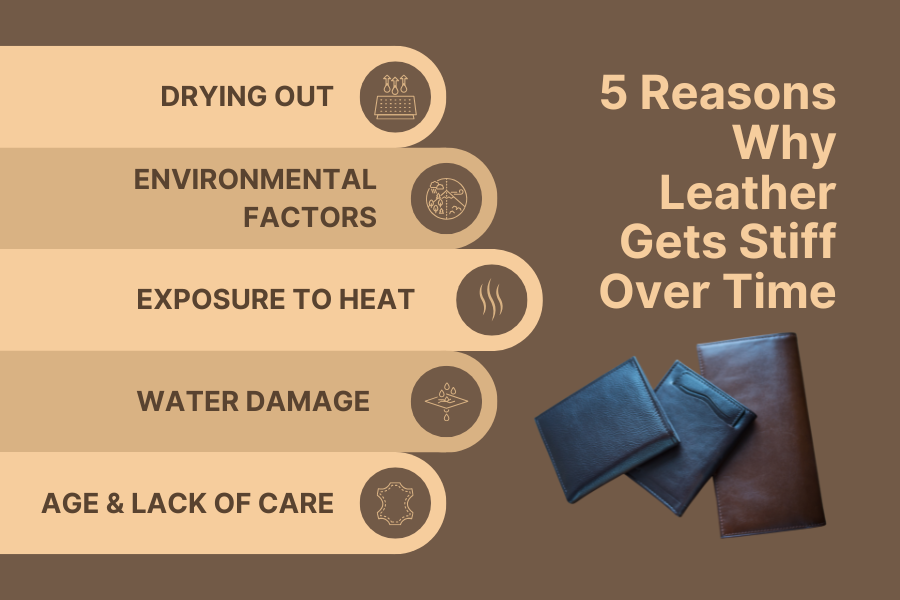
Why Leather Gets Stiff Over Time
Leather, being a natural material, responds to its environment and treatment. However, stiffness doesn’t happen overnight but is a gradual process caused by several key factors.
Here are the most common reasons why leather gets stiff:
Drying Out
Just like human skin, leather contains natural oils that keep it flexible. Over time, these oils evaporate or are depleted. Without these lubricating oils, the leather fibres become dry, brittle, and stiff.
Environmental Factors
Storing leather in an environment that is too dry (low humidity) can sap its moisture.
Conversely, excessive humidity can also be damaging. The ideal relative humidity for leather storage is between 40% and 50%.
Exposure to Heat
Placing a leather jacket in a clothes dryer or using a hairdryer on it too aggressively can cook the natural oils and moisture right out of the material, leading to significant stiffness and potential shrinkage.
Water Damage
If leather gets soaked and isn’t dried properly, the fibres can shrink and harden as they dry, making the surface stiff and prone to cracking. Trapped dampness also invites mildew, salt stains, and dye loss.
Age and Lack of Care
Simply put, leather stiffens with age if it is not properly maintained. Regular conditioning replaces lost oils, preventing the material from drying out and becoming inflexible.
If left untreated, stiff leather will eventually lose its strength and crack, compromising the item’s structural integrity and appearance.
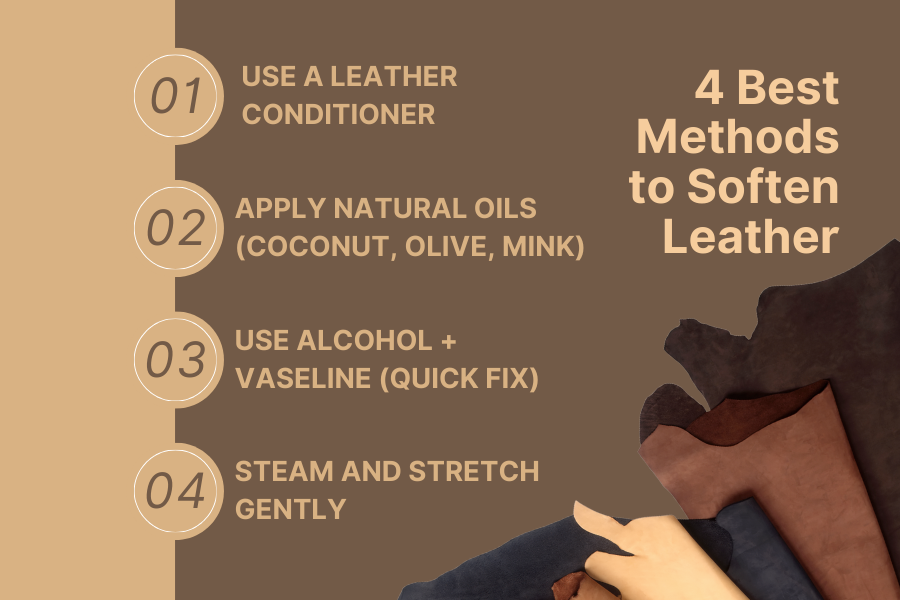
Best Methods to Soften Leather
You can approach softening leather in several ways, depending on what you have on hand and the severity of the stiffness.
Here are the most effective methods to soften stiff leather:
Use a Leather Conditioner
This is the most effective and safest method.
Some of the best leather conditioners are specifically formulated with oils and waxes that penetrate the leather fibres, replenishing lost lubricants without damaging the material.
Here’s how to condition leather:
- Clean First: Wipe away dust and dirt with a soft, dry cloth. For heavier grime, use a slightly damp cloth and mild soap, and let it dry completely.
- Spot-Test: Apply a pea-sized amount of conditioner to an inconspicuous area of your hair. Wait 10–15 minutes to check for colour change or residue.
- Apply Sparingly: Use a soft cloth or sponge to work a thin, even layer of the product into the leather, using small circular motions.
- Massage it in: Gently rub the conditioner so that it penetrates the grain—focus on areas with stiff seams and creases.
- Let it Absorb: Leave the piece to absorb the conditioner for 30 minutes to several hours, or as directed in the product instructions (if available).
- Buff Off Excess: Wipe away any extra with a clean cloth and lightly buff to restore the sheen.
- Repeat if Needed: For very stiff leather, a second light application after 24 hours can help.
For optimal results, condition your leather every 3-6 months, more often for items exposed to sun, heat, or heavy use.
Quick cautions: Don’t use on suede/nubuck; avoid over-saturating; when in doubt (antique, heavily cracked, or specialty leather), consult a professional restorer.
Apply Natural Oils (Coconut, Olive, Mink)
Using household or animal oils is a popular DIY method for softening leather because they penetrate and replenish the leather’s natural oils. However, they come with trade-offs.
| Pros | Cons |
| Readily available and inexpensive | Can darken or change the leather’s colour and patina |
| Penetrates leather to restore suppleness fast | Some vegetable oils (olive, coconut) can go rancid over time and cause odour or mould |
| Gives a warm, natural sheen on many smooth leathers | Oils may clog leather pores, trap dirt, or make the surface sticky if over-applied |
To apply natural oils, it is better to do a small patch test first.
Here’s a step-by-step application:
- Clean the Surface: Wipe the leather with a damp cloth to remove any surface dirt that may have been ground in during the process.
- Apply a Thin Layer of Oil: Using a soft, lint-free cloth, gently rub a small amount of oil into the leather in circular motions to ensure even coverage.
- Let it Absorb Completely: Allow the leather to sit undisturbed for several hours or overnight so the oils can fully penetrate and soften the fibres.
- Buff Off Excess Oil: Gently polish the surface with a clean cloth to remove any remaining oil, which prevents a greasy feel and attracts less dust.
Quick cautions: Natural oils can darken leather, sometimes permanently. If a colour change is unacceptable, stop and use a leather conditioner specifically designed for that type of leather instead.
Use Alcohol + Vaseline (Quick Fix)
If you’re looking for a temporary DIY leather care solution, combining rubbing alcohol with Vaseline can soften stiff leather in a pinch.
This method works because alcohol opens up the leather fibres, allowing the Vaseline to penetrate and restore some flexibility.
However, it’s best seen as a short-term fix rather than a long-term care method.
Here’s how to use alcohol + vaseline to soften leather:
- Clean the Surface: Gently wipe the leather with a soft cloth to remove dust and dirt.
- Dampen With Alcohol: Lightly apply rubbing alcohol using a cotton ball or cloth.
- Let it Open Up: Allow the alcohol to dry for a few minutes; this helps the fibres relax.
- Apply Vaseline: Rub a thin layer into the leather using small, circular motions. Focus on stiff areas.
- Let it Absorb: Leave the leather for several hours or overnight to allow it to absorb the moisture.
- Remove Excess: Wipe with a clean, dry cloth to remove residue and restore shine.
Quick cautions: While effective for quick softening, this method should not be overused. Alcohol can dry out leather with repeated application, and heavy layers of Vaseline may leave a greasy finish or attract dirt.
Steam & Stretch Gently
For shoes and jackets, light steam paired with gentle movement can help loosen stiff leather.
The warm moisture from steam makes fibres more pliable, while stretching encourages the material to regain flexibility.
This is a useful trick for breaking in leather without harsh chemicals. Here’s how to do it:
- Create Light Steam: Hold the leather item a safe distance (about 6–8 inches) above a steaming kettle, pot, or handheld steamer.
- Warm, Don’t Soak: Expose the leather to steam for just a few seconds at a time; rotate to avoid concentrating heat in one spot.
- Stretch Gently: While the leather is warm and pliable, flex it with your hands. For shoes, walk in them briefly with thick socks; for jackets, move your arms in wide motions.
- Let it Dry Naturally: Place the item in a cool, dry spot to air out; avoid radiators or direct sunlight.
- Condition Afterward: Once dry, apply a leather conditioner to lock in softness and prevent re-stiffening.
Quick cautions: Never soak the leather or expose it to excessive heat, as too much steam can warp, crack, or discolour the surface. Keep steaming at a light and controlled pace for safe results.
How to Soften Leather Boots and Shoes
Footwear is the single largest application for leather-care products, accounting for roughly 40.5% of the leather market.
And they require targeted care because they are subjected to focused mechanical stress, moisture, and contaminants that accelerate the ageing of leather more rapidly than many other items.
Every step flexes the same zones (toe box, vamp, collar), compresses the leather against the insole and sole, and exposes the hide to foot sweat, salt, dirt, and outdoor moisture.
Research shows that these repeated flex cycles, combined with environmental exposure, accelerate the loss of the leather’s natural oils and moisture, and concentrate wear at micro-tension points.
As a result, footwear dries, hardens, and eventually cracks faster than many other leather goods.
The Science: How Walking, Stress, and Moisture Stiffen Leather
Understanding the science behind the stiffening of leather due to walking, stress, and moisture is essential to ensure care and longevity.
Loss of Oils & Water = Stiffer Collagen
Leather’s flexibility depends on hydrated collagen fibrils and the oils between them.
When oils evaporate or are washed away, collagen fibrils pack more tightly, and the leather becomes less flexible.
Research indicates that increasing moisture content actually increases pliability (to a point), but uneven wet/dry cycles and pollution can remove oils and leave the surface brittle.
Mechanical Fatigue From Repeated Flexing
Constant bending at the same points creates micro-tears in the fibre network. Over time, those micro-tears become visible cracks in the toe and heel areas.
Chemistry of Perspiration and Salt
Sweat and road salt are acidic/alkaline mixtures that can leach oils and promote breakdown; they also attract dirt into pores, where abrasive particles accelerate wear.
Boot-Specific Conditioner (What Types, and Trade-Offs)
Here are the categories of treatments commonly used for boots:
pH-Balanced Leather Creams/Conditioners (water-based or emulsion creams)
They replenish oils without clogging pores, keep color stable, and are safe for most shoe finishes. Good default choice for work/dress boots.
Beeswax/Dubbin-Style Waxes (solid wax melts/pastes)
Adds a protective wax film and decent water repellency; can darken leather and slightly stiffen the surface when cold, but gives tough protection in wet conditions.
Mink Oil/Heavy Animal Fats
Good for quick softening and added water resistance on rugged boots, but can darken the finish, reduce breathability, and (if overused) lead to pore clogging.
Neatsfoot Oil and Other Heavy Liquid Oils
Penetrate deeply and soften old, dry leather, but they are notorious for darkening leather, weakening some stitching over time, and contributing to “fatty-acid spew” or surface bloom if overapplied.
Quick cautions: Overuse of conditioners can cause long-term issues (oily appearance, embrittlement, fatty-acid spew).
When to call a pro: Deep cracks at flex points, severe sole delamination, or significant fit issues. A skilled professional can reshape, add stretch panels, or re-sole without destroying the leather.
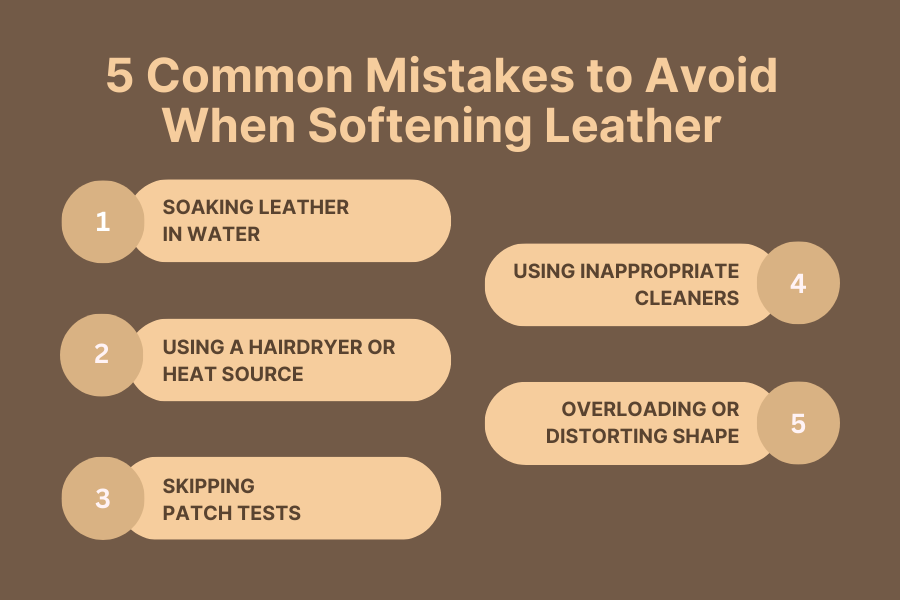
5 Common Mistakes to Avoid When Softening Leather
While trying to bring leather back to life, it’s easy to make errors that do more harm than good.
Here are some of the most frequent missteps, along with final cautions you definitely shouldn’t ignore:
Soaking Leather in Water
Immersing leather or using large amounts of water causes the water to penetrate deeply, swell fibres, leach out natural oils, and displace dyes.
As the leather dries, it often contracts unevenly and loses suppleness. Water spots, staining, and sometimes mold follow.
Using a Hairdryer or Heat Source
Subjecting leather to high heat (such as a hairdryer, radiator, sun, or heat gun) causes rapid drying, which strips the leather of its moisture and oils, leading to shrinkage, brittleness, and cracking.
Additionally, heat can warp the structure, distort the shape, and damage finishes.
Skipping Patch Tests
Since every leather finish/type (smooth, full-grain, pigmented, oiled, etc.) reacts differently to treatment, what works for one might stain, darken, or damage another.
Without testing, you may permanently alter the appearance.
Using Harsh or Inappropriate Cleaners
Household cleaners, solvents, alcohol-based wipes, or bleach can strip away the natural oils and remove dye, causing fading, degrading finishes, and leading to stiffness or uneven texture.
Overloading or Distorting Shape
Forces leather to stretch and maintain unnatural tension, which can deform leather permanently, strain seams, weaken stitching, and make areas thinner or vulnerable.
That said, too much conditioner (or using it too often) can saturate the leather’s pores, prevent it from being breathable, make the surface oily or gooey, and lead fibres to swell in ways that weaken seams or reduce long-term strength.
Additionally, while petroleum jelly may provide a short-term gloss or softness, prolonged use tends to clog pores, attract dirt, and create sticky residues, and may not penetrate the skin properly.
If you avoid these mistakes, your leather softening efforts will be safer, more effective, and longer lasting.
Leather Types and How Softening Differs
Not all leathers behave the same when you try to soften them.
Knowing those differences helps you treat each type properly and avoid damaging your items.
Here’s a quick overview of the most common types of leather and how softening responds to them:
Full-Grain Leather
It is made from the topmost layer of the hide, unsanded, with full strength, natural grain, pores, and fibres intact.
To soften full-grain leather, remember that it reacts well to oils, creams, and conditioners.
Because fibres are tightly packed and of high quality, they can absorb nutrients, stretch gently, and age beautifully.
However, it is also more susceptible to noticeable colour changes or sheen shifts when using strong oils/waxes.
Bonded Leather
Bonded leather is made from leather scraps or fibres mixed with a binder (often polyurethane or another plastic), pressed or layered over a backing, often with an embossed finish to mimic grain.
That said, bonded leather is less durable and doesn’t absorb treatments as well.
Softening attempts (especially with liquids or oils) may sit on or in the binder layer, risk peeling or flaking, and not penetrate deeply. Treatments may temporarily make it feel softer, but durability is limited.
Faux Leather (PU / PVC etc.)
Faux leather is fully synthetic, and sometimes marketed as vegan leather or pleather. Typically, a textile backing coated with plastic layers; no animal hide is used.
Because it lacks natural fibers, it doesn’t soften in the same way.
Some flexibility is provided by the synthetic backing or plasticizers in the coating; however, overheating or applying heavy oils/creams can cause the plastic to warp, become sticky, crack, or lose its finish.
Therefore, softening is more about preserving existing flexibility rather than restoring structure.
Why Not All Leather Reacts The Same
Not all leather types soften the same way because their structure and finish differ.
Full-grain leather absorbs oils and conditioners well, thanks to its dense fibers, which allow it to remain supple and develop a rich patina over time.
Bonded leather, made from scraps and binders, absorbs unevenly and risks peeling, while faux leather’s synthetic surface doesn’t soften and can become sticky or cracked with treatment.
Moisture also plays a role: full-grain breathes and dries evenly, but bonded and faux often trap or repel water, leading to damage.
Simply put, full-grain benefits most from conditioning, while bonded and faux require careful, surface-level care.
Best Leather Softening Products You Can Buy
For best results, using a product designed specifically for leather is your best bet. Some of the include:
Saphir Médaille d’Or Renovateur
Premium cream used by shoe and leather enthusiasts. Cleans lightly, replenishes oils, and gives a refined finish and luster; excellent for fine, smooth leathers and dress shoes.
Leather Honey Leather Conditioner
Deep, oil-based restorer that penetrates well and is popular to soften leather jackets, furniture, and car interiors. It is suitable for very dry or neglected leather that requires stronger reconditioning.
Bickmore Bick 4 Leather Conditioner
Long-standing, commonly used to refresh and condition without heavy darkening; commonly used for boots, furniture, and automotive leather.
Chamberlain’s Leather Milk
Gentle, water-emulsion conditioners and balms are praised for their non-greasy feel and safe use on many leather types (including nicer furniture and apparel).
Cobbler’s Choice Leather Conditioner
A newer favorite among boot wearers, it absorbs well, restores suppleness, and tends to avoid heavy darkening on many leathers.
Frequently Asked Questions
What is the best way to soften leather naturally?
Natural options like coconut, olive, or mink oil can soften leather by restoring lost oils, but they often darken the colour and may cause odor or reduced breathability if overused. Apply sparingly, always patch test first, and avoid using on suede or nubuck. For safer, longer-lasting results, a dedicated leather conditioner is recommended.
How long does it take to soften leather?
Softening time depends on the method. For example, steaming and stretching can be achieved within minutes. Conditioners require a few hours to absorb and up to 48 hours for full effect, while oils typically show results within 24–48 hours. Boots and shoes may take days or weeks of wear plus conditioning to break in fully.
Is it safe to use olive oil on leather?
No. It is not considered one of the safest options. While it can quickly soften stiff material and give a temporary sheen, it often darkens the leather permanently and may leave blotchy stains since it absorbs unevenly. Over time, olive oil can also go rancid, leading to unpleasant odours and even mold growth. Compared to professional leather conditioners, which are pH-balanced and designed to nourish fibres without clogging pores, olive oil is unpredictable and may shorten the lifespan of your leather. If you want natural care, it’s better to choose products specifically formulated for leather rather than relying on pantry oils.
Can I use Vaseline to soften leather?
Yes, you can use vaseline to soften leather by adding surface-level moisture and making leather feel more flexible, which is why some people use it as a quick DIY fix. However, long-term use poses risks: petroleum jelly can clog the leather’s pores, attract dust and dirt, and eventually weaken the fibres, causing cracking or discoloration. It also leaves a greasy residue that may alter the finish. For occasional emergency use, Vaseline won’t ruin most smooth leathers, but for regular care, a proper leather conditioner is far safer and more effective.
How often should I condition leather?
As a general rule, condition leather every 3–6 months to keep it supple and prevent drying or cracking. Items exposed to frequent use, sunlight, or moisture, such as boots, bags, or jackets, may require treatment every 3 months or less. In contrast, furniture or rarely used pieces can often go 6 months or longer between applications. Adjust the condition of the leather and its environment accordingly.
What softens leather quickly?
If you need a fast fix, methods like gently steaming the leather or using a light alcohol-and-Vaseline combo can soften it within minutes. These hacks work quickly by opening pores or adding surface moisture, but they should be used sparingly; overuse can dry out, weaken, or damage the leather in the long term.
Does stiff leather mean it’s low quality?
No. Even high-quality full-grain leather will stiffen when it loses oils, is exposed to heat, or is stored poorly. Stiffness is more often a sign of dryness, the type of tanning/finish (vegetable-tanned pieces can feel firmer initially), or neglect than of inherent quality.
Can I soften faux leather the same way?
No. Faux leather (PU/PVC/vegan leather) behaves differently and needs gentler, surface-level care. It has no collagen fibres to absorb oils, so heavy oils or animal fats tend to sit on the coating, making it sticky, discoloured, or prone to cracking and peeling. Instead, clean gently with a soft cloth and mild soap/water, dry thoroughly, then use a product labeled explicitly for vinyl/PU or a silicone-based protectant made for synthetics. For a little extra pliability, warm the piece lightly (not hot) and flex it by hand rather than forcing stretches.
What softens leather without darkening it?
Look for clear/non-darkening, pH-balanced, water-emulsion or wax-free conditioners and always patch-test first. Products that explicitly state “will not darken” or “safe for all colors” are your safest bet. If you can’t find a labeled “non-darkening” product, choose a light, water-emulsion cream (not heavy oils or waxes). Apply a pea-sized amount to an inside seam, wait 24–48 hours, and inspect for any color shift before treating the whole piece.
Conclusion
Softening leather comes down to choosing the right tool for the job.
The safest, most reliable option is a purpose-formulated leather conditioner (regular maintenance). Natural oils (such as coconut, mink, and olive) and wax/oil blends can soften quickly but risk darkening or long-term issues if overused.
Additionally, steam and gentle stretching are excellent physical methods for maintaining shoes and jackets.
Meanwhile, quick DIY hacks (such as using rubbing alcohol and Vaseline) can be effective in a pinch, but should be treated as temporary solutions.
A few last, practical reminders: always patch test in an inconspicuous spot; never soak or overheat leather; avoid oils on suede/nubuck; and don’t rely on petroleum jelly for long-term care.
Now that you know how to soften leather, use these methods on your leather items every 3–6 months. For valuable or badly cracked leather, consider consulting a professional.
With modest care and the right method, restoring softness is simple, and a little maintenance goes a long way toward keeping leather comfortable, flexible, and long-lasting.
-


Ares Dark Brown Shearling Biker Jacket
Original price was: $ 299.$ 180Current price is: $ 180. -


Raven Black Shearling Aviator Jacket
Original price was: $ 299.$ 180Current price is: $ 180. -

Titan Grey Café Racer Leather Jacket
Original price was: $ 299.$ 160Current price is: $ 160. -


Valiant Brown Shearling Aviator Jacket
Original price was: $ 299.$ 170Current price is: $ 170.


