
It’s easy to get confused by terms like ‘real leather’ vs. ‘genuine leather’.
Many people even ask, is genuine leather real leather?
The short answer is yes, both come from actual animal hide. However, genuine leather is a specific industry grade that’s far lower in quality than what we typically refer to as real leather.
While both materials are technically real leather from animal skin, their quality, durability, and value differ greatly. Real leather usually refers to top grades (like full-grain leather), which are more robust and age beautifully, whereas genuine leather is a budget grade that doesn’t hold up as well.
For example, real full-grain leather items can last 10–15 years or more with proper care, while genuine leather often starts to show wear (peeling or cracking) in just 1–5 years.
In this guide, we’ll explain how to identify each type and why full-grain “real” leather is worth the investment for the long run.
What Does Real Leather Mean?
Real leather generally refers to the highest-quality leather, usually full-grain or top-grain leather cut from the top layer of the hide.
This top layer retains the hide’s natural grain and texture. In other words, real leather comes from the outermost section of the animal skin, which hasn’t been sanded or buffed away.
Because the natural grain remains intact, full-grain leather is extremely strong and durable, with tightly packed fibers that hold up on the animal.
Moreover, it is breathable due to those intact grain pores, meaning it can absorb some moisture and will feel less clammy than synthetic materials.
What Is Genuine Leather?
Genuine leather is real leather, but not all real leather is genuine leather.
In fact, the term genuine leather refers to a lower-grade leather. It’s made from the underside or split layers of the hide that remain after the top is cut off for higher grades.
Manufacturers take this softer, weaker split leather and heavily process it to make it usable. Typically, genuine leather is refinished with pigments and artificial grain patterns to achieve a uniform appearance that simulates the look of real full-grain leather.
This process can hide excessive scars or imperfections, but it also means genuine leather lacks the strength and natural beauty of the top layer.
While it is technically real leather, the term genuine in labeling can be misleading.
It sounds like a positive, but you might think that ‘genuine’ means authentic and high-quality. However, in reality, it’s an industry strategy to label lower-quality leather in a way that still sounds appealing.
So, what is the difference between genuine leather and real leather? Let’s find.
Real Leather vs Genuine Leather – Key Differences
The key differences come down to the layer of the hide used, how the leather is processed, and the resulting durability and feel
Here’s a quick comparison of real leather vs genuine leather:
| Aspect | Real Leather (Full-Grain/Top-Grain) | Genuine Leather |
| Layer Source | The top layer of the hide (outer grain surface) is the strongest part. | Lower split layers of the hide (after the top is removed). |
| Natural Grain | Yes, retains natural grain markings and texture. | No, original grain is gone; it is often embossed with a fake grain pattern. |
| Durability | Extremely high durability; strong fiber structure resists wear. | Moderate to low durability; a weaker structure tends to wear faster. |
| Longevity | Long-lasting and can last for decades with proper care (10–15+ years). | Shorter lifespan and often shows cracks or peeling within a few years. |
| Feel & Breathability | Supple, slightly textured feel; breathable and warm to the touch. | Often has a plastic-like finish; it is less breathable and sometimes stiff or chemically coated. |
| Appearance Over Time | Develops a rich patina and character with age; looks better over time. | The finish may crack or chip off, exposing dull material beneath; it does not develop a patina. |
| Price | Higher cost, sold as a premium product, but with better long-term value (lasts much longer). | Lower cost and sold as a budget-friendly option, but likely needs replacement sooner. |
This comparison shows that real full-grain leather and genuine leather differ in both origin and performance.
These differences explain why full-grain is more expensive and why it outperforms genuine leather in terms of longevity, comfort, and aging.
On the other hand, genuine leather’s uniform look and lower price might appeal to budget shoppers, but it’s achieved through heavy processing and won’t hold up as well as true full-grain leather.
Why Quality and Longevity Matter
Choosing a higher-quality leather isn’t just about bragging rights; it has real impacts on a product’s value and sustainability.
Durability translates into longevity. Therefore, a well-made full-grain leather wallet or jacket might last you 10, 20, or even 30 years with proper care, whereas a cheap genuine leather item could start falling apart after a year or two.
This long lifespan of real leather means you won’t need to replace the item frequently, saving you money over time and reducing waste.
In contrast, if a belt made of genuine leather cracks every couple of years, you’ll end up buying several belts in the same period; you could have been using one good belt.
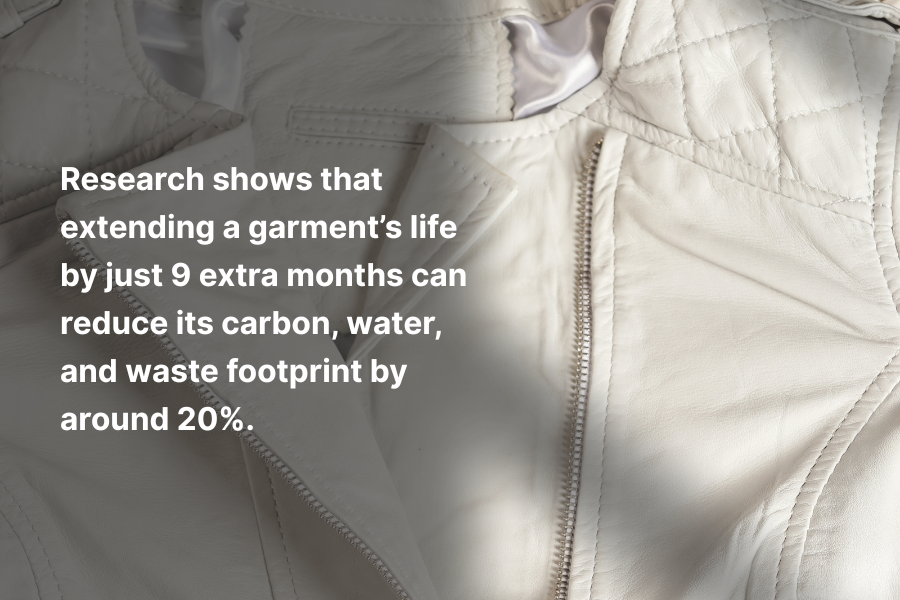
According to research by WRAP, extending the life of our clothing and accessories has significant environmental benefits. For example, extending a garment’s life by just nine extra months can reduce its carbon, water, and waste footprint by around 20%.
The principle is simple: if products last longer, fewer replacements are needed, which means fewer discarded items in landfills and less resources spent producing new goods.
That said, quality leather goods also tend to age gracefully, encouraging you to keep and use them for longer instead of discarding them.
The Different Types of Leather
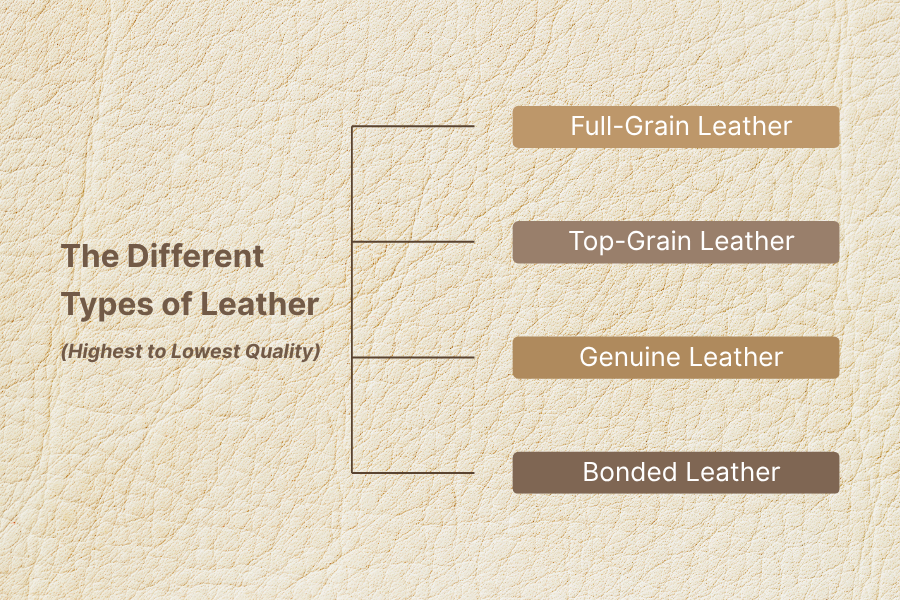
Not all leather is created equal. Leather is categorized into several types or “grades” based on which part of the hide is used and how it’s processed.
Here are the different types of leather in order of highest quality to lowest:
Full-Grain Leather
This is the highest quality leather. It uses the full top layer of the hide with no sanding or buffing of natural marks.
Full-grain leather is extremely durable and retains the natural grain pattern of the animal skin. It often shows natural scars or imperfections, which many consider beautiful and unique.
Mostly used in high-end products like luxury handbags, premium jackets, and quality furniture.
Top-Grain Leather
The second-highest grade, top-grain, is actually full-grain leather that has been slightly processed – the very top surface is sanded or buffed to remove heavy blemishes, and a finishing coat is applied.
This gives a more uniform appearance than full-grain. Also, it is slightly more pliable and thinner, as the sanding process removes some of the hide’s thickness.
Importantly, it is still quite durable (often used in jackets, bags, and furniture), but slightly less rugged than full-grain leather. Thus, many mid-to-high-end leather goods use top-grain for a balance of beauty and cost.
Genuine Leather (Split Leather)
Genuine leather is a polite term for split leather, referring to the lower layers of the hide that remain after the top layer is removed. It’s technically real leather, but of much lower quality.
Manufacturers typically emboss a fake grain pattern and add pigment to make it appear like higher-grade leather. The result is a uniform look, which is a pro for some uses, and it keeps costs down.
However, genuine leather is not very strong or durable. It tends to be used in cheaper belts, shoes, wallets, and furniture where manufacturers want to advertise real leather content without the expense of top-grain.
Bonded Leather
At the bottom is bonded leather, which isn’t one solid piece of hide at all.
Bonded leather is basically leather scraps and fibers that are ground up, mixed with polyurethane or latex binders, and pressed onto a fiber backing.
The result might look like leather from a distance, but it’s typically 10–20% actual leather fibers and the rest synthetic binders.
Bonded leather is economical and is often used in budget furniture or belts. However, it’s very weak and prone to flaking, essentially the particle board of leather.
Also, it doesn’t develop patina, and any wear or flex can cause the bonded material to crack or peel.
Knowing these types helps you understand what you’re buying. For a long-lasting, premium product, full-grain or top-grain is the way to go.
How to Identify Real vs Genuine Leather
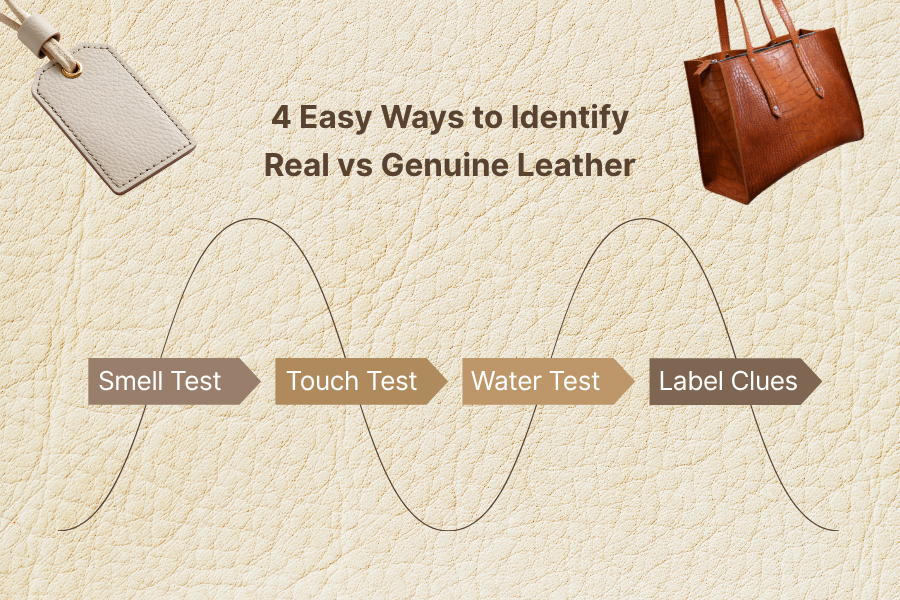
Not sure whether that wallet or jacket is top-grade leather or just labelled genuine?
Here are simple, at-home checks you can do with no special tools, just your nose, fingers, and a tiny drop of water.
Smell Test
Give it a sniff. High-quality leather (full- or top-grain) typically has a rich, natural, slightly sweet, or musky scent. If you mainly smell glue, paint, or plastic, it is likely that the material is heavily processed or coated, rather than top-grade leather.
Also, lower-grade items may still have a faint leather scent, but the pure leather aroma is stronger and more lasting in high-end pieces.
Touch Test (Texture)
Feel the surface. Real full-grain or top-grain leather typically shows small variations or pores and feels supple, rather than perfectly smooth.
When you bend or press it, genuine leather wrinkles slightly and gets natural creases. If the surface feels uniformly smooth, glossy, or plasticky (and doesn’t flex naturally), it may have a heavy synthetic finish or be faux leather.
Water Drop Test
Put a tiny drop of water on an inconspicuous spot. Real, less-finished full-grain leather will absorb the drop slowly, and the spot will darken as it absorbs the liquid.
If the water beads up and doesn’t soak in at all, the surface is sealed, which is common with lower-grade leather that has a thick finish, or with synthetic leather.
Label and Grade Clues
Check the tag or product description. Clear labels, such as those indicating full-grain or top-grain leather, typically signify high quality.
The word genuine leather simply means it’s made from real hide, but it’s a lower grade, often split or heavily treated.
Also, watch the price and brand: very cheap items from unknown brands are more likely to be low-grade leather or bonded leather.
Together, these clues will usually indicate whether a piece is made from high-grade leather or from lower-grade genuine or fake leather.
Pros and Cons Overview
Choosing between real (full-grain) leather and genuine leather comes down to balancing quality vs cost. Here’s a quick overview of the pros and cons of each:
Real Leather Pros and Cons
| Pros | Cons |
| Long Lifespan: Products can last for decades (10, 20+ years) with proper care, far outlasting lower-grade leather.Develops Rich Patina: Full-grain leather ages beautifully, gaining a distinguished patina and character over time.Breathable, Natural Texture: Feels comfortable and breathable; the grain isn’t overly processed, so it has a natural, supple texture (not plasticky).High Strength: Very durable and resistant to wear, it’s less likely to tear or crack since the strongest fibers are intact. | Expensive: Costs more upfront. You’re paying for premium material, which can be a significant investment.Needs Regular Maintenance: To get the most life out of it, you should care for the leather (occasional conditioning, keeping it dry, etc.).Heavier: Full-grain leather items tend to be slightly heavier than those made from cheaper materials due to their greater thickness and density. |
Genuine Leather Pros and Cons
| Pros | Cons |
| Affordable: Generally much cheaper than full-grain. You can get the look of leather without the high price tag, which is good for tight budgets or items you don’t plan to use long-term.Uniform Appearance: Often finished with a smooth, even coating, resulting in a clean, consistent look. There are no visible scars or variations. Low Initial Maintenance: The plastic-like finish makes it somewhat resistant to staining and doesn’t require conditioning early on. | Short Lifespan: Not very durable and tends to last only a few years before the material deteriorates. The surface coating can start peeling, and the leather beneath isn’t strong enough to hold up to long-term use.Prone to Cracking/Peeling: The heavy finish on genuine leather can crack or peel off, especially in high-flex areas (like belt holes or wallet folds). The leather underneath can also stretch out of shape. Once that coating fails, the item often looks bad and can’t be fully restored.Lacks Character: It doesn’t develop a distinctive character with age. In fact, it usually just looks old or worn out, rather than vintage or distinguished like full-grain leather might.Potentially Uncomfortable in Heat: The plastic coating on genuine leather can make it less breathable, so items like genuine leather chairs or jackets may feel sweaty in hot weather compared to those made from real leather. |
Which Should You Choose?
So, which should you choose: real leather or genuine leather?
The decision largely depends on your priorities: budget vs longevity, and the purpose of the item.
If you’re looking for a product you’ll use heavily or for a long time (say, a daily wear belt, a wallet, or a furniture piece you want to keep for decades), it’s wise to invest in real leather (full-grain or top-grain).
The upfront cost is higher, but you get an item that can handle years of use and even looks better as it ages.
On the other hand, if your budget is very tight or you’re purchasing something more for occasional or short-term use, a genuine leather item might make sense.
For example, maybe you want a stylish leather-look jacket but don’t expect to wear it beyond a couple of winters; in that case, genuine leather could serve you well, at a fraction of the price of full-grain.
Whichever you choose, always check the product details to ensure you know what you’re getting. A little label reading goes a long way in ensuring you make an informed choice.
Frequently Asked Questions
Is genuine leather real leather?
Yes, genuine leather is made from real animal hide, but it’s a lower-quality grade than full-grain or top-grain leather. It’s often split, sanded, and heavily finished (or even bonded from scraps) to achieve a uniform look, which keeps costs down and reduces early maintenance. However, this also makes it less durable, less breathable, and less likely to develop the rich patina that high-grade leather gains with age.
Why is genuine leather cheaper?
Genuine leather is cheaper because it’s made from the lower layers of the hide (or from leather scraps) rather than the strong outer grain. Those lower layers are sanded, glued, and covered with heavy finishes or coatings to achieve a uniform appearance, which is cheaper to produce than using full-grain hides and careful tanning.
How long does genuine leather last?
Genuine leather typically lasts between 1 and 5 years with light use and basic care. Its lifespan depends on the hide quality and the degree of surface finish; cheaper or heavily coated pieces tend to start cracking or peeling sooner, especially at folds and stress points. You can help it reach the upper end of that range by avoiding prolonged sun or heat, wiping spills quickly, storing it away from moisture, and performing gentle cleaning and occasional conditioning.
What is the best type of leather for durability?
Full-grain real leather is the most durable option. It preserves the strongest, outer fibers of the hide (the natural grain), allowing it to resist tears, abrasions, and heavy wear far better than top-grain, genuine, or bonded leathers. With proper care, it can last for decades and even improve in appearance as it develops a rich patina.
How can I tell if my item is real or genuine leather?
Here’s a quick checklist to tell if your item is real or genuine leather:
Feel: Real leather has natural grain and slight wrinkles; fake feels smooth or plasticky.
Smell: Genuine hide has an earthy scent; chemicals or plastic indicate a fake or coated product.
Edges: Real leather has fibrous edges, while faux leather has a fabric or plastic backing.
Water test: Real leather absorbs a tiny drop slowly; fake or coated leather makes it bead.
Label & price: “Full-grain” or “top-grain” = high quality; “genuine” = lower grade.
Stitching: Quality items have neat, even stitching and sturdy hardware.
Does genuine leather peel or crack over time?
Yes, genuine leather often peels or cracks over time because it’s made from lower hide layers covered with heavy surface coatings. These coatings can dry, crack, or peel away with use, especially in areas that bend or flex. In contrast, full-grain leather remains strong and ages naturally without surface peeling.
Conclusion
In the showdown of real leather vs genuine leather, the key takeaway is: Real leather signifies premium, long-lasting quality. In contrast, genuine leather refers to a lower-tier product that offers real leather at a lower cost but with a much shorter lifespan.
Both come from actual hides, but not all leather is equal. Real, full-grain leather will serve you for years and develop character, whereas genuine leather may look good initially but won’t wear as well or as long.
Next time you’re shopping for leather goods, take a moment to check the label and materials.
Remember, investing in a quality full-grain leather item means you likely won’t have to buy it again for a very long time; it’s better for you and even for the environment in the long run.
But if you do opt for genuine leather due to budget, just have the right expectations: treat it gently and don’t be surprised if you need to replace it after a couple of years.
Now you know what makes real leather truly different from genuine leather, and you can shop smarter and more sustainably.
-


Ashford Dark Brown Field Leather Jacket
Original price was: $ 200.$ 165Current price is: $ 165. -


Dominion Brown Suede Bomber Jacket
Original price was: $ 299.$ 180Current price is: $ 180. -


Monaco Black Café Racer Leather Jacket
Original price was: $ 299.$ 180Current price is: $ 180. -

Regent Black Leather Car Coat
Original price was: $ 299.$ 180Current price is: $ 180.


