When you picture a rugged leather jacket (the kind that feels substantial, protective, and built to outlast its owner) you are probably picturing steerhide.
But the question is: what is steerhide leather?
Steerhide is a premium type of bovine leather made from the hide of male cattle known as steers. It is prized for its exceptional durability, thickness, and ability to develop character over time.
Unlike softer, more delicate leathers such as lambskin, steerhide is designed to withstand wear, abrasion, and the elements across many years of use.
According to Forbes Business Insight, the global leather apparel market is substantial, with approximately 63% of global leather-product exports being leather apparel; jackets, coats, and pants forming the core segment.
Steerhide is a major contributor inside this cowhide‑based apparel category, favoured by manufacturers and consumers alike for its strength and reliability. From motorcycle gear to work boots and belts, steerhide is the leather of choice when performance matters as much as appearance.
This guide explains what steerhide leather is, how it compares to other leathers, why it is so popular, and whether it is the right choice for your next jacket or accessory.
What Is Steerhide Leather?
Steerhide is a bovine leather made from the hide of male cattle, known as steers. These are typically castrated adult male cattle raised primarily for food production. Because steers are raised in large numbers under controlled conditions, their hides are more uniform in grain, texture, and thickness compared to hides from bulls or uncastrated males.
Steerhide is a subset of cowhide, which is the most common type of leather worldwide.
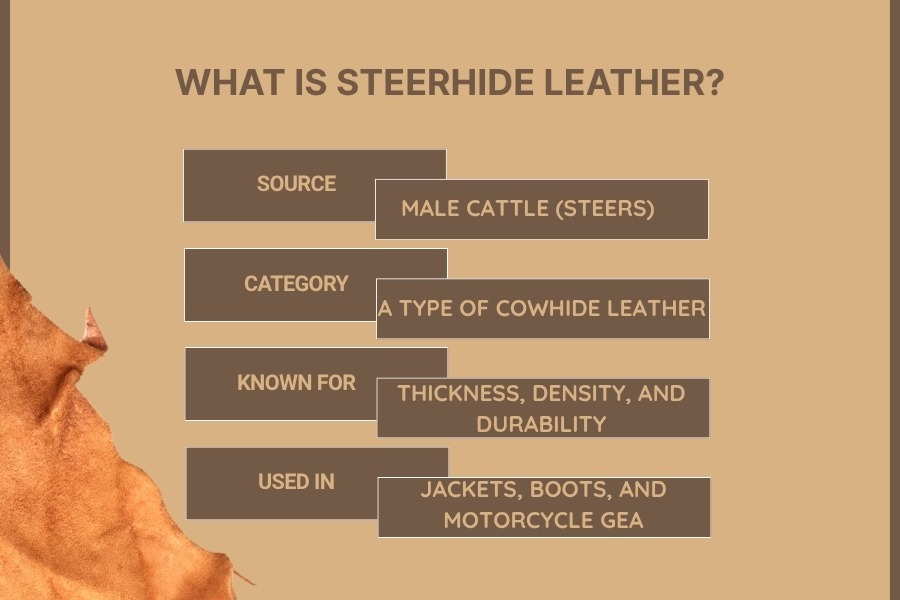
Key points about steerhide:
- Source: Male cattle (steers)
- Category: A type of cowhide leather
- Known for: Thickness, density, and exceptional durability
- Used in: Heavy-duty leather products including jackets, boots, and motorcycle gear
How Steerhide Leather Is Made
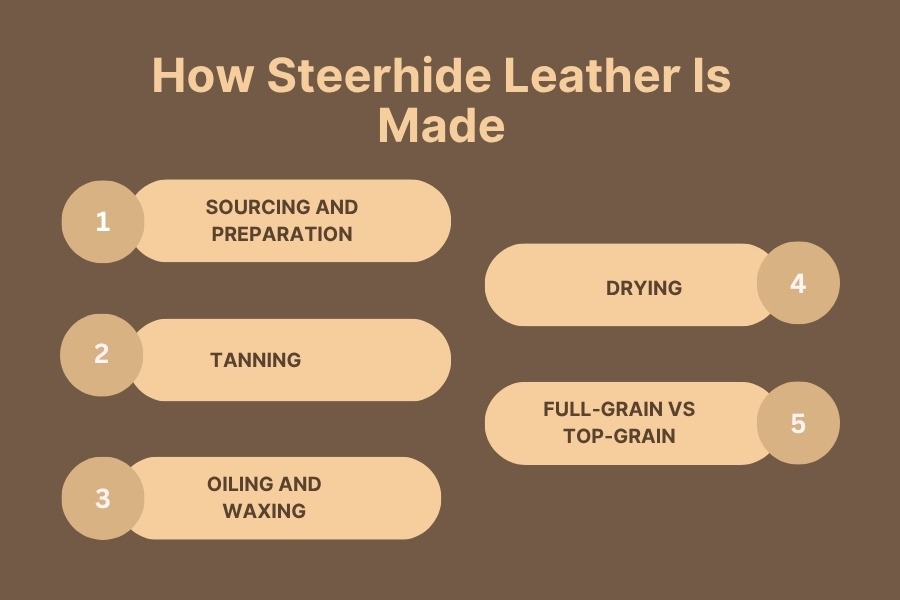
The journey from animal hide to finished leather involves several critical steps that explain why steerhide is so durable and distinctive.
- Sourcing and preparation: After the hide is removed from the steer, it undergoes initial preservation through salting or drying. The hide is then fleshed (removing excess tissue), stretched, and prepared for tanning.
- Tanning: This process transforms raw hide into stable, usable leather. Two main methods are used:
- Chrome tanning: Uses chromium salts to produce leather that is soft, supple, and more water‑resistant. This is the most common method for steerhide used in fashion and casual jackets.
- Vegetable tanning: Uses natural tannins from tree bark and plants. This method takes longer but produces leather that is firmer and develops a richer patina over time.
- Oiling and waxing: Steerhide is often heavily oiled or waxed during tanning to boost weather resistance. A combination of natural oils and resins gives steerhide its characteristic subtle gloss-sheen. These oils also help keep the leather from drying out, making it highly waterproof.
- Drying: Some manufacturers use vacuum drying instead of toggle drying. This leads to a slightly stiffer result as the fibers are not stretched and softened. This stiffness is intentional; it allows the leather to break in gradually and conform perfectly to the wearer’s unique shape.
- Full‑grain vs top‑grain: Steerhide can be finished as either full‑grain or top‑grain leather. Full‑grain steerhide retains the hide’s natural surface, including pores and markings, making it the strongest and most breathable option. Top‑grain steerhide is lightly sanded to remove imperfections, creating a more uniform surface. Both are durable, but full‑grain is generally considered the premium choice.
Steerhide vs Cowhide Leather: What’s the Difference?
This is one of the most common points of confusion. The short answer: steerhide is cowhide, but not all cowhide is steerhide.
| Feature | Steerhide | Cowhide (General) |
| Source | Male cattle (steers) | Male or female cattle, any age |
| Consistency | More uniform in grain and weight | Can vary more widely |
| Thickness | Typically thicker and denser | Varies by source |
| Stretch resistance | More resistant to stretching | More prone to stretching |
| Water resistance | Greater water resistance | Varies |
| Break‑in | Longer, stiffer initially | Generally softer, faster break‑in |
Key differences explained:
- Hide consistency: Steerhide is “consistent in grain and weight throughout the hide”, which means manufacturers get better yields and more predictable results. Cowhide from female cattle can have “looser bellies (that is, a more spongy fiber structure that has more stretch)”.
- Thickness and density: Steerhide is “typically thicker, denser, and more resistant to stretching” than cowhide. You can describe it as plump, full bodied and rich to the touch.
- Break‑in period: Steerhide is “often stiff upon purchase” and “will break in and develop beautiful patina over time”. Cowhide is “softer and easier to break in”.
- Quality perception: Steerhide is “considered to be better quality than cowhide”, though exceptions exist. The consistency of steerhide makes it a preferred choice for premium manufacturers.
Key Characteristics of Steerhide Leather
Steerhide has a distinct set of properties that make it ideal for certain applications.
- Thickness: Steerhide is a heavyweight leather. Manufacturers usually use 3 to 3.5‑ounce steerhide (approximately 1.2mm–1.4mm) for their jackets. This thickness contributes to its durability and protective qualities.
- High abrasion resistance: The dense collagen fibre structure of steerhide resists tearing and grinding against rough surfaces. It is “known for its durability and strength” and is “generally thicker and more durable than other types of leather”.
- Firm, structured feel: Steerhide is described as “plump, full bodied and rich to the touch”. It holds its shape well, which is why it is used for structured jackets that need to maintain their silhouette.
- Longer break‑in period: Unlike softer leathers, steerhide “can feel stiff and rigid” when new. Initially, the leather “may feel a bit stiff but given some time it will break in beautifully, becoming butter-soft and conforming perfectly to your unique shape”.
- Develops patina over time: With wear, steerhide “develops a deep patina”. This natural aging process (where the leather darkens, softens, and gains character) is part of what makes steerhide products so appealing to those who value longevity and authenticity.
- Water resistance: The oil and wax treatment during tanning gives steerhide “greater water resistance”. Its “sealed finish offers an extra layer of protection against water”.
Why Steerhide Leather Is So Popular
Steerhide’s popularity stems from a combination of durability, availability, and performance.
- Industry dominance: Bovine leather, including cowhide and steerhide, dominates the global leather market. Cowhide (including steerhide) accounts for roughly 65% of all leather produced globally, greatly exceeding sheep, pig, and exotic‑animal skins. This dominance highlights steerhide’s visibility in jackets and workwear, making it one of the most accessible and reliable leather options for manufacturers worldwide.
- Durability and reliability: For products that need to withstand wear, abrasion, and the elements, steerhide delivers. It is the leather equivalent of a heavy‑duty work boot; not the most elegant, but the most dependable.
- Consistency: Manufacturers value steerhide because it is “consistent in grain and weight throughout the hide”. This predictability means better yields and more reliable production runs.
- Versatility: Steerhide is used across a wide range of products, from jackets and boots to belts, luggage, and upholstery. Its thickness and strength make it suitable for both fashion and function.
- Heritage appeal: Iconic brands have built their reputations on steerhide jackets. The Schott 618 Perfecto, famously worn by Marlon Brando in The Wild One, is a classic example of a steerhide jacket. This association with motorcycle culture and rugged workwear gives steerhide a timeless, authentic appeal.
Common Uses of Steerhide Leather
Steerhide’s combination of thickness, abrasion resistance, and structure makes it suitable for a variety of demanding applications.
- Leather jackets: Steerhide is particularly popular for biker and motorcycle jackets. The leather’s density provides protection against wind, road debris, and abrasion. Cowhide and steerhide are “durable and structured, ideal for jackets that see real wear”.
- Motorcycle gear: In addition to jackets, steerhide is used for riding gear because its thickness “makes it excellent for protection against the cold” and its durability stands up to the demands of the road. The more you wear it, “the more it conforms to your body”.
- Boots and footwear: Steerhide is a common choice for work boots and rugged casual footwear. Its thickness provides structure and support, while its durability ensures the boots last through years of wear.
- Belts and rugged accessories: The firmness of steerhide makes it ideal for belts that need to hold their shape under tension. Wallets, bags, and key rings also benefit from steerhide’s strength and weather resistance.
Is Steerhide Leather Good for Jackets?
For certain types of jackets, steerhide is excellent. For others, it may be the wrong choice.
- Ideal for biker and rugged jackets: Steerhide’s thickness, abrasion resistance, and structured feel make it perfect for motorcycle jackets and workwear‑inspired outerwear. These jackets are meant to protect and endure, and steerhide delivers on both fronts.
- Offers protection and structure: Unlike softer leathers that drape and flow, steerhide holds its shape. This is desirable for jackets with strong silhouettes, such as double‑rider biker jackets with asymmetrical zippers.
- Compared with lambskin: Lambskin is “the softest and thinnest leather”, “supple and comfortable from the get‑go”. It drapes beautifully but offers minimal abrasion resistance. Steerhide is heavy, stiff initially, and takes time to break in, but it offers superior protection and longevity.
Who should choose steerhide? If you want a jacket that will last decades, develop character, and protect you from the elements and the road, steerhide is an excellent choice. If you prefer lightweight comfort and immediate softness, consider goatskin or lambskin instead.
Steerhide Leather Durability: How Long Does It Last?
With proper care, a steerhide leather jacket can last decades; potentially a lifetime.
Steerhide jackets are investments that stand the test of time.
What contributes to this longevity?
- Thickness: Thicker leather has more material to wear through before it fails.
- Dense fibre structure: The collagen fibres in steerhide are tightly packed, resisting tearing and abrasion.
- Oil and wax treatments: Many steerhide products are impregnated with oils and waxes that keep the leather supple and water‑resistant.
- Aging quality: Steerhide develops patina rather than deteriorating. The leather softens, darkens, and gains character without losing structural integrity.
The warning: steerhide requires occasional maintenance. Conditioning when the leather appears dry, storing away from direct sunlight and heat, and avoiding prolonged soaking in water will extend its life significantly.
Pros and Cons of Steerhide Leather
Here are the pros and cons of steerhide leather to help you make a decision.
Pros
Extremely durable: One of the toughest leathers available for jackets and accessories
Abrasion‑resistant: Provides genuine protection against friction and road debris
Long lifespan: Can last decades with proper care
Structured, premium look: “Plump, full bodied and rich to the touch”
Develops rich patina: Ages beautifully, gaining character over time
Water‑resistant: Oil and wax treatments provide natural water resistance
Cons
- Heavier than softer leathers: Steerhide is a heavyweight material
- Longer break‑in period: “Often stiff upon purchase”; requires weeks or months of wear
- Less flexible initially: Stiff out of the box; mobility is restricted until broken in
- Can feel bulky: The thickness may feel excessive for those accustomed to lighter outerwear
Steerhide vs Other Leather Types
| Leather Type | Thickness | Durability | Break‑in | Best For |
| Steerhide | Heavy (3‑3.5oz) | Excellent | Long | Motorcycle jackets, workwear |
| Cowhide (general) | Varies | Good to excellent | Moderate to fast | General jackets, accessories |
| Lambskin | Thin | Lower | Short (5‑10 wears) | Fashion jackets, lightweight outerwear |
| Goatskin | Medium | Very good | Moderate | Balanced jackets, riding gear |
| Horsehide | Varies | Excellent | Long | Heritage jackets, repro styles |
Steerhide sits at the durable end of the spectrum, alongside horsehide. It is thicker and tougher than goatskin and significantly more durable than lambskin. For those who prioritise protection and longevity over softness and lightweight comfort, steerhide is hard to beat.
How to Care for Steerhide Leather
Steerhide is low‑maintenance compared to suede or nubuck, but it still benefits from occasional care.
- Cleaning: Start with a soft brush or dry cloth to remove surface dirt. For tougher grime, use a damp cloth with a small amount of mild soap; but avoid over‑wetting and never soak the leather. Avoid household cleaners, which can strip essential oils.
- Conditioning: Steerhide is “usually heavily oiled or waxed during tanning to boost weather resistance”. Conditioning isn’t often needed, but if the leather starts to feel dry or loses its sheen, “apply a small amount of leather conditioner”. Use conditioner sparingly to avoid softening the structure too much. Buff off any excess conditioner to avoid buildup.
- Drying: If the leather gets wet, “blot gently and allow it to naturally dry at room temperature, away from heat sources”. Never use a hairdryer or radiator to speed up drying.
- Storage: Store your steerhide jacket on a padded hanger to maintain its shape. Keep it in a cool, dry closet away from direct sunlight and strong indoor lighting. Avoid plastic garment bags; use breathable fabric covers instead.
FAQs — Steerhide Leather
Is steerhide leather real leather?
Yes. Steerhide is genuine leather made from the hide of male cattle (steers). It is a premium subset of cowhide.
Is steerhide better than cowhide?
Steerhide is a more consistent and reliable form of cowhide. Many consider it better quality because the hides are more uniform in grain and weight. However, both are genuine bovine leathers with similar core properties.
Is steerhide leather good for jackets?
Yes, particularly for biker, motorcycle, and rugged workwear jackets. It offers excellent abrasion resistance, structure, and longevity.
Does steerhide leather soften over time?
Yes. Steerhide “can feel stiff and rigid” when new but “will break in beautifully, becoming butter-soft and conforming perfectly to your unique shape”. The break‑in period is longer than with lambskin or goatskin, but the result is a custom‑fit jacket that retains its structure.
How thick is steerhide leather?
Steerhide is a heavyweight leather. Manufacturers commonly use 3 to 3.5‑ounce leather for their jackets (approximately 1.2mm–1.4mm). It is “typically thicker, denser, and more resistant to stretching” than general cowhide.
Conclusion
Before deciding if Steerhide leather is a good investment, it is important to know what is steerhide leather is and what to expect.
It is heavy, stiff, and demands patience during the break‑in period. But for those who value durability, protection, and a jacket that improves with age, steerhide is one of the best choices available.
As a subset of cowhide (which accounts for roughly 65% of all leather produced globally, as reported by GT Portugal), steerhide benefits from widespread availability and consistent quality.
Its oil‑ and wax‑infused finish provides natural weather resistance, while its dense fibre structure offers unmatched abrasion resistance.
If you are looking for a leather jacket that will last decades, develop character, and protect you from the elements, steerhide is worth the investment.
The break‑in period is a rite of passage, not a drawback. And the result (a jacket that fits like a second skin and tells your story through its patina) is something softer leathers simply cannot replicate.
Explore our collection of leather jackets to find the right steerhide piece for your wardrobe. For help with fit, see our leather jacket sizing guide.