Let’s settle the debate that has likely crossed your mind the moment a raincloud darkens the horizon while you’re wearing your favorite leather jacket: Does leather shrink when it gets wet?
The short answer is a resounding yes, but the truth is more than a simple spoiler.
The culprit isn’t the water itself, but the aftermath, the drying process.
Imagine the luxurious, supple hide as a network of delicate collagen fibers. When drenched, they swell with moisture; subject them to the harsh blow of a heater or the harsh sun, and those same fibers contract in a panic, pulling the material taut, stiff, and irrevocably smaller.
But fear not.
In this guide, we’ll separate myths from facts about leather shrinkage, explain the science behind what happens when leather gets wet, and share practical tips for drying and caring for your items the right way.
You’ll also learn how to restore shrunken leather and protect your pieces from future water damage, so your favorite leather goods stay in great shape for years to come.
Does Leather Shrink When It Gets Wet?
Let’s be clear: leather most certainly can shrink when wet, transforming a cherished piece from a perfect fit to a wardrobe regret in a single misstep.
Therefore, it is important to allow a damp leather piece to air dry gently at room temperature, which may result in only a subtle, often manageable, tautness.
The true danger lies in the temptation of a quick fix: the direct heat of a hairdryer, the blaze of a radiator, or the glare of the afternoon sun.
This aggressive heat forces the leather’s natural fibers to contract violently as their moisture is ripped away, leading to significant, often irreversible, shrinkage and a distressing stiffening of the material.
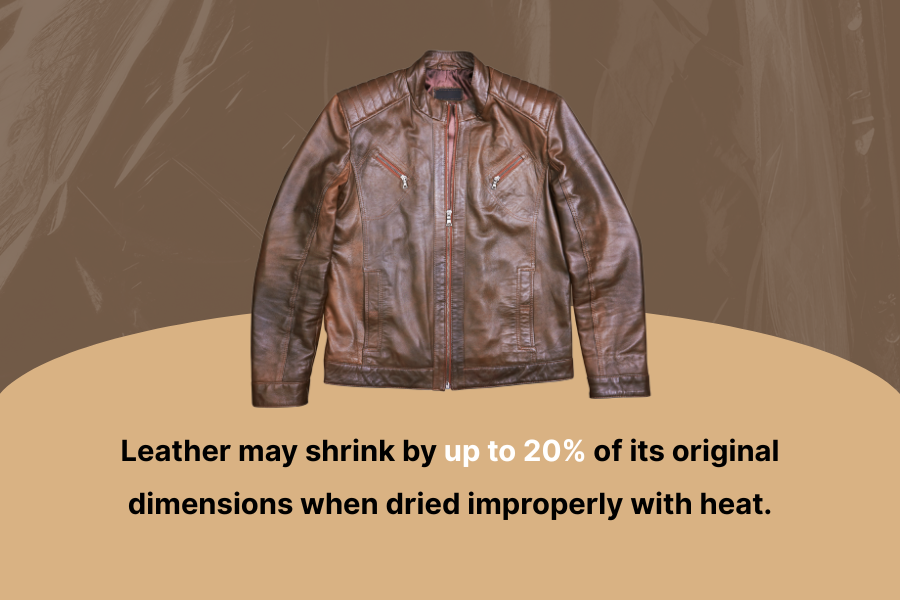
Leather Shrinkage is Significant with Heat and Moisture
Leather may shrink by up to about 20% of its original dimensions when dried improperly with heat.
To envision the consequence, imagine a perfectly tailored medium jacket emerging from this ordeal, looking and feeling several sizes too small.
That said, it’s a sartorial sin born of good intentions but with a punishing outcome.
The takeaway is your new golden rule for leather care: treat a wet piece with patience, not heat.
Why Does Leather Shrink When Wet? The Science of Fiber Contraction
At its core, leather is a natural, fibrous material, and its reaction to water is a fascinating lesson in textile science.
Imagine a dense, interwoven network of collagen fibers. When these fibers absorb water, they swell and relax, much like a sponge that has absorbed water.
This is why you might notice a damp leather item feeling softer and slightly stretched.
The critical transformation happens during the drying process.
As moisture departs, the swollen fibers contract and pull closer together. If this process is rushed with direct heat, the fibers don’t just return to their original state; they panic, tightening aggressively and irregularly.
This forceful contraction is what leads to permanent shrinkage, distortion, and a stiff, hardened feel.
Moreover, the loss of natural oils during washing increases this, leaving the fibers without their essential lubrication, which prevents them from sliding back into place.
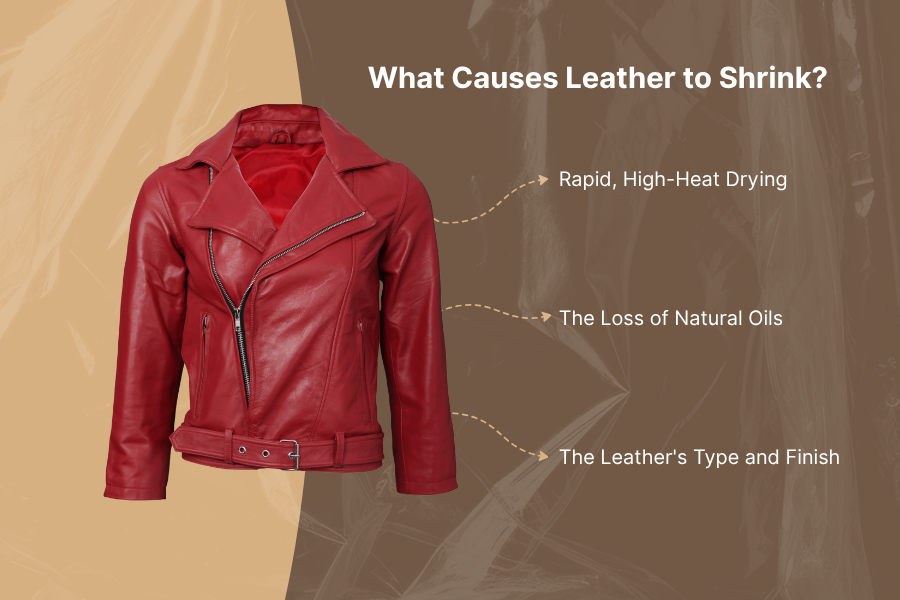
The Key Culprits: What Causes Leather to Shrink?
The primary driver of shrinkage is the violent contraction of leather’s internal fibers.
Here are the main leather shrinkage causes:
Rapid, High-Heat Drying
This is the number one enemy. The leather shrinks in the sun, using a hairdryer, or from exposure to a radiator, forcing moisture out too quickly, which causes extreme and irreversible fiber contraction.
The Loss of Natural Oils
Water doesn’t just swell fibers; it also washes away the leather’s natural lubricating oils. Without these oils, the fibers become brittle and lock into their shrunken state.
The Leather’s Type and Finish
Not all leather is created equal. Porous, unfinished leathers like full-grain and vegetable-tanned varieties absorb water more deeply, making them far more susceptible to significant swelling and subsequent shrinkage.
Given this, the wetting and drying process triggers a physical change where the fiber network contracts more than it expanded.
The golden rule for preservation is therefore simple: always opt for slow, room-temperature drying.
Not All Leathers Are Equally Vulnerable
While any leather can fall victim to shrinkage, its inherent resistance is a tale of two processes: chrome tanning versus vegetable tanning.
The chemicals used to transform raw hide into durable leather fundamentally alter its molecular structure, creating a dramatic divide in how it withstands heat and moisture.
Chrome-Tanned Leather: The Durable Workhorse
Tanned using chromium salts, this leather undergoes a process that aggressively stabilizes its collagen fibers. Think of it as building molecular armor.
Recent research highlights how chrome tanning creates a dense, cross-linked network that is highly resistant to heat and water penetration.
This is why chrome-tanned leather is the gold standard for automotive interiors, footwear, and bags meant for harsh conditions.
Shrinkage Temperature: It can resist shrinking in wet heat until temperatures reach a remarkable 100–120 °C, well above the boiling point of water.
Practical Implication: Your chrome-tanned car seats or handbag can handle a spilled drink or a rain shower with minimal risk of distortion, provided they are dried properly at room temperature.
Vegetable-Tanned Leather: The Sensitive Natural
In contrast, vegetable-tanned leather is crafted using natural tannins from bark and wood. This traditional method is beloved for its ability to develop a rich patina, but it leaves the fibers more porous and less fortified.
A 2022 review in Materials Today Communications confirmed that these plant-based tannins do not create the same robust, heat-stable cross-links as chromium salts. This makes veg-tan leather exceptionally vulnerable.
Shrinkage Temperature: It begins to shrink at much lower thresholds, typically between 70 °C and 85 °C. In some cases, significant exposure to water alone can cause stiffening and minor shrinkage even without added heat.
Practical Implication: A vegetable-tanned leather wallet, belt, or bag requires vigilant care. Soaking it and leaving it to dry in a warm spot can lead to permanent warping and a noticeable size reduction.
Common Myths About Leather Shrinkage, Debunked
Here are some of the most common myths about leather shrinkage:
Myth 1: Leather is Waterproof, So a Little Rain is Fine
While a brief drizzle may bead up, sustained exposure allows moisture to seep deep into the fibers, causing them to swell.
Myth 2: Heat is the Fastest Way to Dry a Soaked Leather Item
Applying direct heat doesn’t just dry the leather; it forces the swollen fibers to contract violently and irreversibly. The result isn’t a restored piece, but a shrunken, stiffened version of its former self.
Myth 3: Shrunk leather can always be fully restored
While some minor shrinkage can be improved with conditioning and stretching, severe shrinkage, especially that caused by heat, is usually permanent.
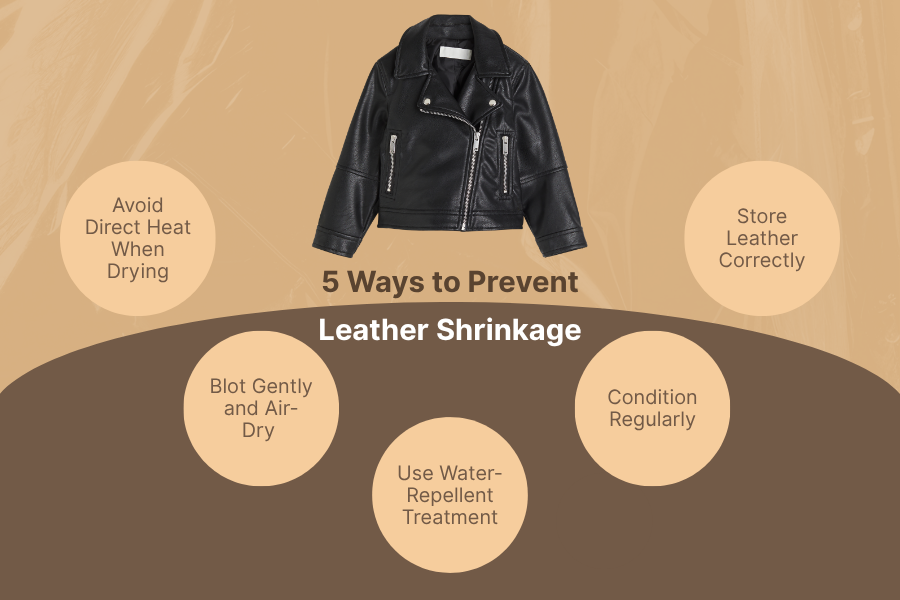
How to Prevent Leather Shrinkage
The good news is that you can protect your items from shrinking with the proper care and leather drying tips. However, the core principle is simple: avoid the damaging combination of saturation and high heat.
When your leather becomes wet, the actions you take in the first few hours are critical. Here are some ways you must follow to prevent leather shrinkage:
Avoid Direct Heat When Drying
Never use heat sources, such as hair dryers, radiators, or direct sunlight, to dry wet leather. Rapid drying causes the fibers to tighten too quickly, leading to shrinkage and stiffness.
Instead, let leather air-dry naturally at room temperature. For instance, if your shoes get soaked, keep them in a cool, well-ventilated spot indoors and allow them to dry slowly.
Blot Gently and Air-Dry (Don’t Twist or Stretch)
After leather gets wet, gently blot away excess moisture with a soft cloth. Avoid wringing, twisting, or stretching, as wet leather is delicate and prone to deformation.
Lay the item flat to dry or stuff it with a clean towel or newspaper to help it hold its shape and absorb moisture evenly.
Use Water-Repellent Treatment
Apply a quality leather protector or water-repellent spray to your items before they are exposed to rain or snow. These sprays, often made with silicones or waxes, help water bead off the surface instead of soaking in.
While they won’t make leather completely waterproof, they reduce absorption and lower the risk of swelling and shrinkage. Reapply regularly for continued protection.
Condition Regularly
Conditioning leather keeps it supple and resistant to damage. A good conditioner replenishes natural oils that water can strip away, helping the fibers stay flexible and hydrated.
Always condition leather once it’s fully dry after exposure to water, and maintain a routine conditioning schedule to prevent cracking or shrinkage over time.
Store Leather Correctly
Store leather goods in a cool, dry environment away from heat and sunlight. Avoid damp basements, hot attics, or cramped storage spaces, as these can lead to warping or mold growth.
If you live in a humid area, use desiccant packs or a dehumidifier to protect against moisture buildup. Make sure items are stored without pressure or tight folding to preserve their shape.
By following these simple steps, you can reduce the risk of leather shrinkage.
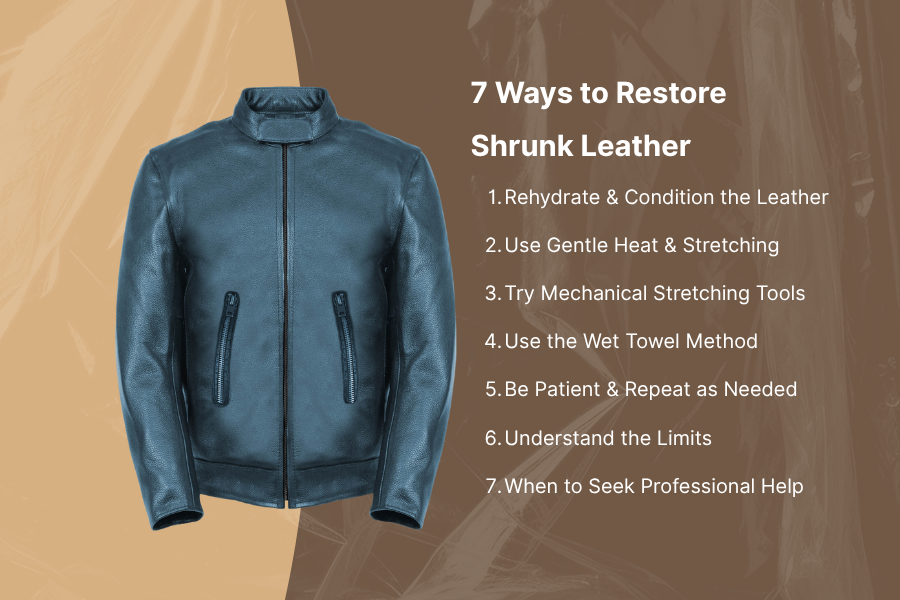
How to Restore Shrunk Leather
If your leather item has already shrunk or become stiff after getting wet, don’t lose hope; some improvement is often possible.
While severe shrinkage caused by high heat may be irreversible, gentle restoration techniques can help recover some flexibility and shape.
The goal is to reintroduce moisture, soften the fibers, and carefully stretch the leather back toward its original form.
Here’s how to do it safely:
Rehydrate and Condition the Leather
Start by applying a generous amount of leather conditioner or oil. This step restores moisture to the fibers, making them pliable again before they are stretched.
Massage the product evenly into the stiff areas using your hands or a soft cloth, then let it sit for several hours or overnight.
Once absorbed, the leather should feel softer and easier to work with.
Products such as mink oil, neatsfoot oil, or high-quality leather conditioners are all suitable options. However, it’s best to test a small area first to check for color changes.
Use Gentle Heat and Stretching
Mild warmth helps loosen leather fibers but must be applied cautiously. The safest approach is the steam method: hang the leather item in a steamy bathroom for 10–15 minutes, allowing it to become warm and slightly damp, but not soaked.
Once pliable, remove it and gently stretch it back into shape, tug lightly on sleeves, straps, or panels as needed.
Alternatively, use a garment steamer on a low setting, keeping it a few inches away from the surface and moving continuously to avoid overheating.
Try Mechanical Stretching Tools
For smaller items, such as shoes, gloves, or belts, stretching tools can be helpful. Insert a shoe stretcher into leather footwear or use a belt form to gently expand the material.
Leather stretching sprays, typically alcohol-based, can also be used to increase the elasticity of the fibers. Moisten the leather lightly, apply gentle tension, and let it dry naturally.
While it may not return completely to its original size, you can often regain a comfortable fit.
Use the Wet Towel Method for Targeted Softening
For localized shrinkage, dampen a towel (not soaking wet) and wrap it around the affected area for a couple of hours. The leather will gradually absorb moisture, softening in the process.
After removing the towel, massage and lightly stretch the section to encourage flexibility. This technique works well for small, stiff areas, such as hat bands or leather patches.
Be Patient and Repeat as Needed
Leather restoration takes time. You may need to repeat conditioning, warming, and stretching several times for noticeable results.
Allow the leather to rest and dry naturally between sessions, and continue applying conditioner to maintain softness and prevent cracking.
Understand the Limits
Not all shrinkage can be undone. If the leather was severely overheated, such as being left in a dryer or direct sunlight, its internal fibers may have tightened permanently.
In such cases, you can often restore some softness and flexibility, but not the original dimensions. Minor shrinkage, however, can usually be corrected with persistence and care.
When to Seek Professional Help
For valuable or sentimental leather items, professional repair may be the best option.
Leather specialists and cobblers use advanced tools and treatments that can restore shape and texture more effectively than home methods.
They also know how far leather can be stretched safely without damage.
While complete recovery may not always be possible, you can usually restore softness, flexibility, and comfort, turning a stiff, shrunken item into something usable and well-loved again.
Leather Care Tips for Wet Weather
If you live in a rainy climate or simply want to wear your leather goods through the wet season, some thoughtful preparation and regular maintenance can make all the difference.
Here’s how to keep your leather protected from moisture-related damage like shrinkage, stiffness, or mold:
Apply a Protective Shield
Before wearing leather in damp conditions, treat it with a water-repellent product such as a silicone-based spray, beeswax cream, or dubbin.
These form a protective barrier that helps water bead up and roll off the surface. While not fully waterproof, this layer offers valuable protection during light rain.
Dry Immediately and Correctly
If your leather gets wet, gently wipe off moisture with a soft, dry cloth as soon as possible. Allow the item to air-dry naturally at room temperature, away from direct heat sources such as radiators or heaters.
To help items retain their shape, stuff wet shoes with newspaper and hang jackets on padded hangers.
Keep Leather Away from Direct Sunlight
Never dry wet leather in direct sunlight. UV rays can fade colors, and the accompanying heat can cause fibers to contract, resulting in shrinkage. Always dry and store leather items in a cool, shaded place to maintain their appearance and structure.
Rotate Your Leather Items
Avoid wearing the same leather shoes or jacket every day, especially in consistently wet weather.
Allowing leather to dry and “rest” between uses fully prevents moisture from building up, which can lead to shrinkage, stiffness, or mold over time.
Store Leather in a Dry Place
Never store damp leather in enclosed spaces, such as car trunks, basements, or plastic bags. Always ensure items are completely dry before storing.
In naturally humid areas, use dehumidifiers or silica gel packs in closets or storage boxes to maintain low moisture levels.
Maintain with Regular Conditioning
Wet weather and indoor heating can strip leather of its natural oils. Keep leather supple and resilient by conditioning it every few weeks during rainy or winter months.
After any wet exposure, allow the item to dry fully, then apply a leather conditioner to replenish moisture and prevent cracking or shrinkage.
With proper waterproofing, conditioning, and a little extra care, your leather will remain soft, strong, and perfectly shaped throughout every season.
Frequently Asked Questions
Can leather shrink from water?
Yes, leather can shrink when it gets wet. When exposed to water, the leather’s collagen fibers absorb moisture and expand. As it dries, especially under heat or direct sunlight, those fibers contract tightly, causing the leather to stiffen, harden, and sometimes shrink permanently. Drying slowly at room temperature helps prevent this contraction.
How do I fix shrinkage in leather?
To fix leather shrinkage, try these gentle restoration methods:
Condition and Soften: Apply leather conditioner or oil to rehydrate and make the fibers flexible.
Use Gentle Heat: Lightly steam or warm the leather (never with direct heat) to loosen the fibers.
Stretch Gradually: Use your hands or tools, such as shoe stretchers, to reshape while the material is pliable.
Rehydrate with Humidity: Briefly place the item in a humid environment to relax stiffness before stretching.
Repeat as Needed: Restore slowly, multiple gentle sessions work better than one aggressive attempt.
Is it safe to dry wet leather with heat?
No, it’s not safe to dry wet leather with heat. Direct heat from hair dryers, radiators, or sunlight causes the fibers to contract rapidly, leading to permanent shrinkage, stiffness, and cracking. Always let leather air-dry naturally at room temperature to preserve its shape and texture.
Can leather stretch back after it shrinks?
Leather can sometimes stretch back after mild shrinkage, especially if it’s rehydrated and gently stretched using conditioners or steam. However, severe shrinkage, particularly from high heat, is usually permanent, as the collagen fibers tighten and lose elasticity. You can soften and improve flexibility, but full restoration isn’t always possible.
Does leather shrink in the rain?
Yes, leather can shrink if it gets soaked in the rain and then dries too quickly or under heat. When wet leather loses moisture too quickly, its fibers tighten and harden, resulting in shrinkage and stiffness. Drying it slowly and conditioning afterward helps prevent this damage.
Conclusion
Leather is a strong and attractive material, but it requires proper care to maintain its durability.
So, does leather shrink when it gets wet? Yes, especially if it’s exposed to heat while drying, but this doesn’t always happen.
Leather fibers absorb water and expand, and if they dry too quickly, they contract, which can lead to shrinkage and stiffness.
However, not all leathers react the same way.
Chrome-tanned leather is more resistant to water and heat, making it a better choice for outdoor use or furniture. Vegetable-tanned or unfinished leather is more sensitive and needs extra care to prevent shrinking.
Preventing shrinkage mostly comes down to simple steps: avoid direct heat, air-dry wet leather slowly, use conditioners and waterproofing products, and store items properly.
If shrinkage does occur, techniques like reconditioning, gentle steaming, and careful stretching can often restore flexibility and usability, even if the original size isn’t fully recovered.
With the right care, your leather items can remain soft, well-shaped, and attractive for years, regardless of rain or accidental spills.
So, go forth and let the skies open.
-


Ashford Dark Brown Field Leather Jacket
Original price was: $ 200.$ 165Current price is: $ 165. -


Dominion Brown Suede Bomber Jacket
Original price was: $ 299.$ 180Current price is: $ 180. -


Monaco Black Café Racer Leather Jacket
Original price was: $ 299.$ 180Current price is: $ 180. -

Regent Black Leather Car Coat
Original price was: $ 299.$ 180Current price is: $ 180.