
Incorrect measurements are the single biggest cause of unhappy returns of leather jackets.
And the odds are almost always stacked against you when your measurements are off.
If you want the jacket to hug your shoulders, drape across your chest, and let your sleeves fall just right, you need to know how to measure yourself for a leather jacket before you click ‘buy’.
So, how to measure yourself for a leather jacket?
The most reliable results come from measuring yourself while wearing a thin shirt and standing upright, using a flexible tape measure placed flat against the body for chest and shoulder readings.
In this guide, you’ll get a clear, step-by-step measuring technique (think: chest, shoulder, sleeve, and back length) and a unisex size chart you can actually use to avoid costly returns.
Why Measuring Matters Before Buying a Leather Jacket
When you’re shopping for a leather jacket, accurate measurements are important.
Because leather is a non-stretch, rigid material in comparison to many fabrics, even a small misfit can make a big difference in how the jacket feels and functions.
Leather’s Non-Stretch Nature
Unlike knitted fabrics or blends, most genuine leather jackets are made from hides that don’t offer much give.
Standard leather jackets are typically made from real leather alone, without elastic inserts, so they don’t expand much with wear.
Because of this minimal stretch, the fit you buy is nearly the one you’ll wear for years, not one that will significantly grow with you.
How Wrong Measurements Cause Fit Problems
Because leather won’t stretch much, when the measurements are off, you’ll likely run into three major issues:
- Restricted movement
If the chest or upper back is measured too small, the jacket will pull tight when you raise your arms, lean forward, or drive. The leather can feel rigid and uncomfortable, and seams may strain or pucker.
- Tight shoulders
If the shoulder width (measured from bone to bone across the upper back) is underestimated, the shoulder seams will ride up, the sleeves will lift, and the jacket won’t allow natural arm movement. The shoulders may feel pinched, or the stitching may even pull.
- Oversized sleeves or body
On the other hand, if measures are too large or ease is excessive, the jacket might look and feel baggy, with shoulders drooping over the arms and the body looking loose and unstructured.
Tools You’ll Need for Accurate Measurements
Here’s your go-to leather jacket measurement guide to help you gather the right tools and prepare correctly:
- Flexible measuring tape: Use a soft, cloth or plastic tape that follows the body curves snugly. Rigid rulers will not do.
- Fitted, thin T-shirt: Wear a light, close-fitting shirt (not a bulky sweater) when you measure yourself; this mimics what you’ll likely wear under your jacket.
- Full-length mirror (or wall mirror): Use the mirror to check that the measuring tape lies flat and level around your body (especially for chest and back).
- Notepad or phone/app: Record each measurement in both inches and centimetres (many brands use one or the other).
- Helper (strongly recommended): While you can take some measurements solo, having someone assist improves accuracy, particularly for shoulder width and sleeve length.
- Soft tape for body contour following: A soft (cloth/plastic) measuring tape allows you to follow the curves of the body (chest, around shoulders) without digging in or floating away.
When you follow this checklist, you’ll get cleaner, more consistent numbers, and thus a better chance of choosing a jacket size that fits well, looks good, and doesn’t lead to returns.
Step-by-Step Guide on How to Measure Yourself for a Leather Jacket
Getting the perfect leather jacket fit starts with accurate measurements.
Because leather is a non-stretch material, even small errors can result in tight shoulders, short sleeves, or a jacket that feels baggy. Taking the time to measure yourself carefully ensures comfort, mobility, and a polished look.
Here is a detailed step-by-step guide with tips to get precise measurements:
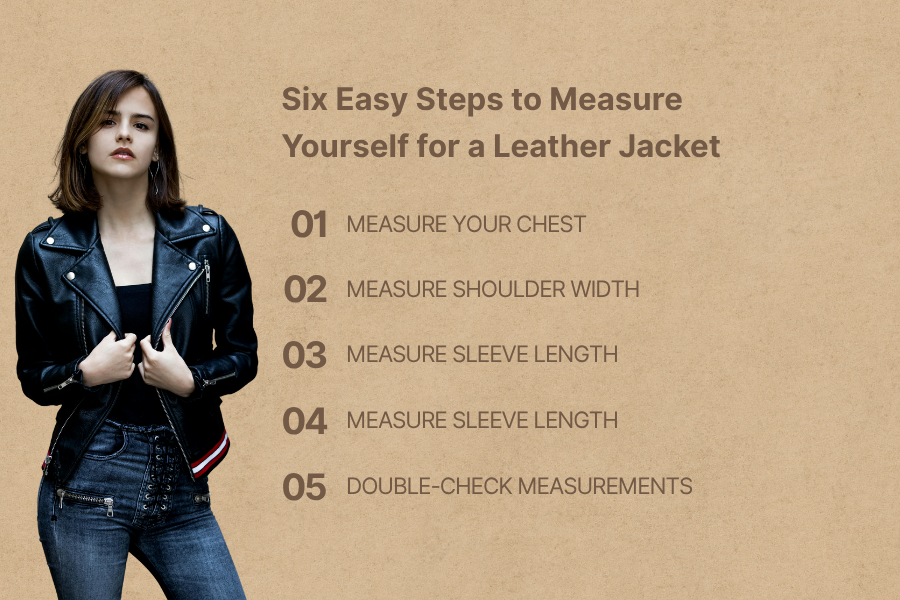
Step 1 – Measure Your Chest
Stand upright, wearing a thin, fitted T-shirt so the tape follows your body.
Wrap a flexible tape measure around the fullest part of your chest, across the nipples for men or the fullest bust point for women.
Keep the tape level and parallel to the floor, avoiding drooping or riding up.
Breathe naturally and keep the tape snug but not tight; this ensures a realistic measurement rather than a compressed one.
Helpful Tip: Slide a finger under the tape to avoid constriction. Record your measurement in both inches and centimeters.
Step 2 – Measure Shoulder Width
Measure from the edge of one shoulder bone to the other, straight across the upper back. Stand tall but relaxed, keeping your shoulders in a natural position.
Accurate shoulder measurements are critical, as leather doesn’t stretch; even a small miscalculation can make the jacket feel tight or awkward.
Step 3 – Measure Sleeve Length
With a slightly bent arm, measure from the shoulder seam down to the wrist bone. The slight bend mimics natural arm movement and ensures sleeves aren’t too short or restrictive.
Note the measurement carefully, as sleeve length impacts both comfort and style.
Step 4 – Measure Waist and Hips (If Applicable)
For longer jackets or tailored fits, measure around your natural waist and hips. Keep the tape snug but relaxed as it follows your body’s contours.
These leather jacket sizing tips help prevent bulkiness and sagging at the bottom, while maintaining a sleek silhouette.
Step 5 – Double-Check Measurements
Accuracy is everything when buying leather online. Measure twice to confirm your numbers, and jot them down in both inches and centimeters.
This ensures you have precise references when consulting size charts, minimizing the risk of a poor fit or return.
Leather Jacket Size Chart (Men & Women)
Here’s the leather jacket size chart as a starting point:
Men’s Size Chart (inches/cm)
| Size | Chest (in/cm) | Shoulder (in/cm) | Sleeve (in/cm) | Waist (in/cm) |
| S | 36–38 in91.4–96.5 cm | 16–17 in40.6–43.2 cm | 32–33 in81.3–83.8 cm | 30–32 in76.2–81.3 cm |
| M | 38–40 in96.5–101.6 cm | 17–18 in43.2–45.7 cm | 33–34 in83.8–86.4 cm | 32–34 in81.3–86.4 cm |
| L | 42–44 in106.7–111.8 cm | 18–19 in45.7–48.3 cm | 34–35 in86.4–88.9 cm | 34–36 in86.4–91.4 cm |
| XL | 46–48 in116.8–121.9 cm | 19–20 in48.3–50.8 cm | 35–36 in88.9–91.4 cm | 36–38 in91.4–96.5 cm |
| XXL | 50–52 in127.0–132.1 cm | 20–21 in50.8–53.3 cm | 36–37 in91.4–94.0 cm | 38–40 in96.5–101.6 cm |
Women’s Size Chart (inches/cm)
| Size | Chest (in/cm) | Shoulder (in/cm) | Sleeve (in/cm) | Waist (in/cm) |
| XS | 30–32 in76.2–81.3 cm | 14–14.5 in35.6–36.8 cm | 30–30.5 in76.2–77.5 cm | 24–26 in61.0–66.0 cm |
| S | 32–34 in81.3–86.4 cm | 14.5–15 in36.8–38.1 cm | 30.5–31 in77.5–78.7 cm | 26–28 in66.0–71.1 cm |
| M | 34–36 in86.4–91.4 cm | 15–15.5 in38.1–39.4 cm | 31–31.5 in78.7–80.0 cm | 28–30 in71.1–76.2 cm |
| L | 36–38 in91.4–96.5 cm | 15.5–16 in39.4–40.6 cm | 31.5–32 in80.0–81.3 cm | 30–32 in76.2–81.3 cm |
| XL | 38–40 in96.5–101.6 cm | 16–16.5 in40.6–41.9 cm | 32–32.5 in81.3–82.5 cm | 32–34 in81.3–86.4 cm |
Sizes may vary slightly by brand, cut, and country of origin, so always check the retailer’s own measurements before buying.
Helpful Tip: If you fall between two sizes, consider the style and how you’ll wear the jacket: size up for room to layer, size down for a snug, fitted look.
Tips for Accurate Measurement
Getting reliable numbers matters more than rushing through the process.
Here are simple, stylish tips to make your measurements count:
- Measure over a thin, fitted T-shirt: Thin fabric follows your shape without adding bulk, making it the most realistic baseline when learning how to measure yourself for a leather jacket.
- Keep the tape snug, not tight: You should be able to slide one finger under the tape. Snugness gives a true circumference; tightness compresses and underestimates.
- Stand tall but relaxed: Posture matters: hunched shoulders or a slouched spine will shorten shoulder and chest readings. Stand naturally with arms at your sides.
- Use a soft, flexible tape: It hugs curves and gives more accurate shoulder and chest contours than a rigid ruler.
- Re-measure twice (or have a helper): Take each measurement two times and average them, or ask a friend to help for perfect symmetry.
- Write everything down in inches and cm: Clear notes save guessing when you compare brand charts later.
Follow these, and you’ll dramatically reduce the risk of surprises when your jacket arrives.
Common Measurement Mistakes to Avoid
Even a small measuring error can throw off your entire fit.
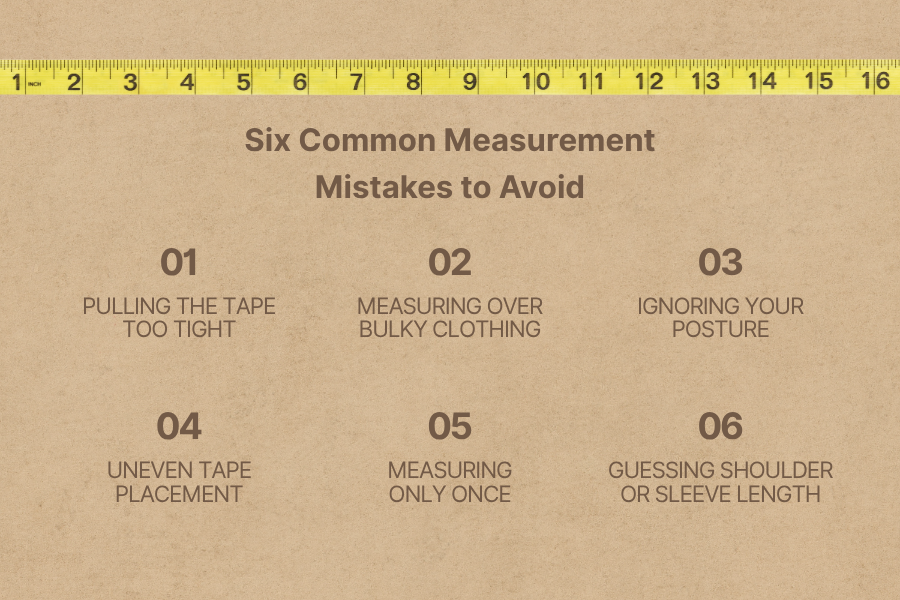
Here are the most common slip-ups people make and how to fix them before they cost you a perfect jacket:
1- Pulling the tape too tight
Many people think a tighter tape equals a more “accurate” fit, but it actually gives you smaller numbers that make your jacket feel restrictive.
To avoid this, keep the tape snug but comfortable so you can slip one finger between the tape and your body.
2- Measuring over bulky clothing
Taking measurements while wearing a hoodie or sweater can add extra inches, making the jacket look baggy or oversized.
Therefore, always measure over a thin T-shirt or undershirt. If you plan to layer, add an inch later instead of measuring over bulky clothes.
3- Ignoring your posture
Slouching or leaning while measuring alters your chest and shoulder width, resulting in a poor fit around the upper body.
To avoid this, stand tall and relaxed, shoulders back but not stiff, and keep your arms naturally at your sides.
4- Uneven tape placement
If the measuring tape tilts upward or downward, especially around the chest or shoulders, your readings will be inconsistent.
Thus, use a mirror or helper to check that the tape stays level and parallel to the floor.
5- Measuring only once
A single measurement can be misleading, especially if you moved slightly or misread the tape.
For this, take each measurement at least twice (or thrice if needed) and note both inches and centimeters for cross-checking with size charts.
6- Guessing shoulder or sleeve length
Eyeballing these numbers or using clothing labels as a guide rarely works for leather jackets, since different brands cut patterns differently.
Use a flexible measuring tape and measure your body directly. For sleeves, bend your arm slightly to simulate real movement.
Avoid these common mistakes, take your time, and you’ll save yourself from disappointment when your leather jacket arrives.
How to Match Measurements with Jacket Sizing
Once you’ve taken all your body measurements, the next step is learning how to find your jacket size using manufacturer charts.
Every brand has its own sizing standards, so your recorded measurements, especially chest and shoulder width, will help you choose the most accurate fit rather than relying on small, medium, or large labels.
Start by locating the brand’s official size chart, often found on the product page or under the ‘Fit & Sizing’ section.
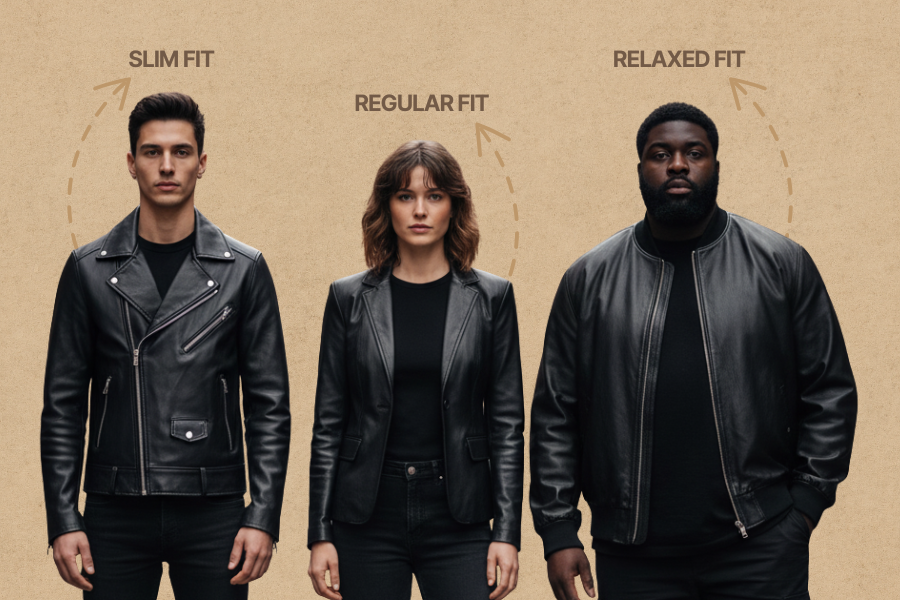
Fit preferences matter:
- Slim Fit: Offers a tailored, body-hugging look with minimal extra room. Ideal if you plan to wear your jacket over a thin shirt or want a sleek silhouette.
- Regular Fit: Slightly more relaxed around the chest and waist for easier movement. Best for everyday wear.
- Relaxed Fit: Provides extra space for layering or broader body shapes. Perfect for colder months when you wear sweaters or hoodies underneath.
During winter, you should size up slightly to allow for thicker clothing underneath.
In contrast, if you live in a warmer climate or plan to wear your leather jacket mostly indoors, stick to your exact body measurement for a neater fit.
Lastly, remember that different brands and leather types (cowhide, lambskin, sheepskin) can affect fit and stretch slightly over time.
Leather Jacket Fit Checklist Before You Buy
Before you hit ‘Add to Cart,’ run through this quick leather jacket fit checklist to make sure your measurements translate into the perfect fit.
Here’s what to check:
- Shoulder seams align with the edge of your shoulders: The seam should sit right at the natural edge of your shoulder bone. If it droops down your arm, the jacket is too big; if it pulls upward, it’s too small.
- Jacket zips comfortably across the chest: You should be able to zip it up without strain or feeling like you’re holding your breath. The leather should contour to your body, not squeeze it.
- Sleeves reach the wrist bone: When your arms are at your sides, the cuffs should sit right where your wrist meets your hand. This prevents the jacket from looking short when you bend your arms.
- Waistline sits flat, no bunching: The jacket should rest smoothly at your natural waist or hip line (depending on style). Bunching or flaring indicates an incorrect size or cut.
- Movement feels natural when your arms lift: try raising them or crossing them over your chest. You should feel some resistance, but not tightness or pulling across the back.
If everything on this checklist checks out, you’ve likely found your ideal jacket size, one that balances comfort, movement, and timeless style.
Frequently Asked Questions
Should I size up when buying a leather jacket?
Whether you should size up depends entirely on how you plan to wear your leather jacket and the cut you choose. In most cases, you should stick to your true measurements for the best fit, as leather naturally molds to your body with wear, becoming softer and more flexible over time. Only size up if you plan to layer thicker clothes (like sweaters) or if the jacket has a slim-cut design.
How do I know if my leather jacket fits correctly?
You can tell your leather jacket fits perfectly when it follows your body’s natural lines without feeling tight or loose. Check these key fit points before deciding:
- Shoulder seams: Should sit exactly at the edge of your shoulders — not drooping down or riding up.
- Chest fit: The jacket should zip easily without strain or gaps, allowing natural breathing.
- Sleeves: Should end right at your wrist bone, covering it slightly when you bend your arms.
- Waistline: Should rest flat against your torso without bunching or flaring.
- Movement: You should be able to raise your arms comfortably without feeling restricted across the back.
If your jacket passes all these checks, it’s a sign of a well-fitted, comfortable leather jacket that will only get better with time.
Can leather jackets stretch over time?
Yes, leather jackets naturally soften and stretch slightly with regular wear. The material conforms to your body’s shape, especially in areas like the chest, shoulders, and elbows, providing a more comfortable fit over time. However, the stretch is limited, so accurate initial measurements are still essential; don’t rely on leather to grow several sizes.
What’s the correct way to measure sleeve length?
To measure sleeve length accurately, keep your arm slightly bent at about 15° and relaxed at your side. Place the tape at the outer shoulder seam or shoulder bone, then run it down the outside of your arm, over the elbow, to the wrist bone where your hand meets the wrist. This position accounts for natural movement and ensures sleeves aren’t too short when you bend your arms.
Should I measure myself or get professional help?
You can accurately measure yourself at home for most jackets with a flexible tape, a mirror, and a helper. Self-measurement works well for chest, waist, and sleeve length if you follow the proper steps. However, for shoulder width, custom fits, or premium leather jackets, professional help or a tailor ensures precise measurements and prevents mistakes that could affect comfort and appearance.
Do men’s and women’s leather jacket sizes differ?
Yes, men’s and women’s leather jackets are sized differently to match body shape and proportions. Women’s jackets typically have a narrower shoulder width, a more tapered waist, and a slightly shorter torso, while men’s jackets are straighter through the waist and broader in the shoulders. Sleeve length and chest placement also differ, so always consult a gender-specific size chart to ensure the best fit.
Conclusion
Taking the time to measure yourself correctly ensures that your jacket complements your shape, feels comfortable, and looks sharp.
Accuracy in measurement, especially around the chest and shoulders, plays the biggest role in achieving that sleek, tailored look while preventing the common problems of tightness, poor mobility, or unnecessary returns.
Now that you know how to measure yourself for a leather jacket, you can be successful every time you shop, whether online or in-store.
Keep your notes handy and bookmark or save the size chart for future use; your measurements will serve as a reliable reference for years to come.
When your jacket fits perfectly, it doesn’t just look good; it moves with you, feels effortless, and grows even more comfortable over time.
-


Ascot Black Perforated Leather Biker Jacket
Original price was: $ 200.$ 180Current price is: $ 180. -


Axis Black Heritage Racer Jacket
Original price was: $ 200.$ 180Current price is: $ 180. -


Hampton Chocolate Brown Bomber Jacket
Original price was: $ 200.$ 180Current price is: $ 180. -


Regent Black Café Racer Leather Jacket (Minimalist Edition)
Original price was: $ 299.$ 170Current price is: $ 170.


