When it comes to leather jackets or designer bags, we spend thousands of dollars, but rarely ask for details about the quality of the leather used.
Truth be told, we are more concerned with style, color, and design.
However, it is essential to note that not all leather originates from the same grain, let alone the same hide.
Top-grain leather is one of the highest grades of leather, developing character and patina over time.
This leather is sanded down to the outermost layer to remove imperfections and inconsistencies. Also, the top grain leather is known for its durability and smooth texture, making it a versatile option.
Therefore, understanding leather grain helps you pick the perfect product, whether you’re after a new jacket or a premium backpack.
In this blog, we will explore what is top grain leather, how it is made, its benefits, common uses, and care tips and techniques.
What is Top-Grain Leather?
Top-grain leather starts with carefully selected raw hides, usually the outermost layer of the animal hide. Also, it is the second-highest quality layer of the hide.
The hide is cleaned, preserved, and tanned (commonly with chrome or vegetable tanning) to stabilize the collagen and make the material durable. After this, it is split or shaved to a uniform thickness, allowing the top layer to be worked into finished leather.
To understand better, let’s look at the main layers of a leather hide:
Grain: The top layer that carries the hide’s natural texture, markings, and unique character.
Corium: The middle layer is made of strong fibers that give the leather its durability and structure.
Flesh: The bottom layer, found closest to the animal’s muscle, is softer and less dense than the others.
Top-grain leather represents the largest share of this market, accounting for roughly 60% of total revenue, which equates to USD 27 billion of the 2024 value.
Additionally, recent trade data indicate that the U.S. exports approximately 17–18 million hides annually and imports substantial volumes of finished leather and leather goods.
The key characteristics of top-grain leather are:
Smooth and Uniform Appearance
The surface is lightly sanded and finished to remove scars and uneven marks. This creates an even, polished look that’s attractive for furniture and accessories.
Soft Texture
Finishing layers and conditioning give top-grain a supple, pleasant feel. It’s comfortable to touch while still feeling like real leather.
Good Durability and Strength
Top-grain retains the hide’s strong, structural layer, allowing it to resist wear and last longer. While not as rugged as full-grain, it balances longevity with a refined finish.
Controlled Grain and Corrected Imperfections
Manufacturers correct or mask natural blemishes through sanding and the application of pigments. The result is a consistent texture and color across larger panels or products.
Easier maintenance and stain resistance
Protective finishes prevent spills from penetrating the surface, making cleaning easier. This makes top-grain a practical choice for everyday use, as it requires minimal upkeep.
Although the surface is refined, top-grain leather still retains many of the natural characteristics of leather, including its strength, subtle pore patterns, and the underlying grain structure, but in a more controlled and consistent manner.
How is Top-Grain Leather Made?
Top-grain leather is crafted from high-quality hides, where their surfaces are refined to achieve both durability and smoothness.
Through controlled sanding, finishing, and treatments, manufacturers produce a leather that combines much of leather’s natural strength and texture with a more uniform, polished appearance.
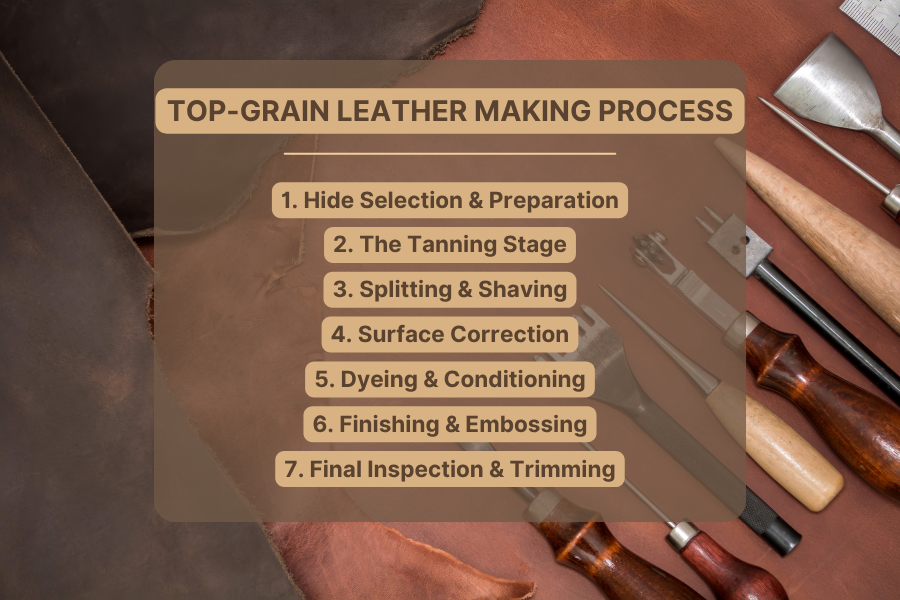
Here’s the complete process of how top-grain leather is made:
Hide Selection & Preparation
The process begins with selecting premium raw hides, typically from cattle. These hides are thoroughly cleaned to remove dirt, salt, and other impurities.
They are then dehaired and fleshed to remove residual tissue and fat. Finally, they are treated to prevent decay during transport and storage.
The Tanning Stage
The prepared hide is submerged in a tanning agent, such as chromium salts for softness and water resistance or vegetable tannins for a natural, patina-developing finish.
Splitting & Shaving
The top layer, which contains the tight, dense fiber structure and natural grain, is separated from the lower, fibrous layers (which become suede or split leather).
This top layer is then shaved to a perfectly uniform thickness.
Surface Correction
To achieve top-grain’s signature uniform look, the leather surface is lightly sanded or buffed. This step removes natural imperfections, such as scars, insect bites, and wrinkle patterns.
Dyeing & Conditioning
The corrected leather is immersed in dye to impart color. This can be an aniline dye that soaks through for a rich, natural look, or a surface-level pigment.
The leather is also re-tanned and treated with conditioning oils, fats, or waxes.
Finishing & Embossing
A protective topcoat is applied to the dyed surface. This layer can contain pigments for even color, sealants, and clear coatings.
It adds the desired sheen (from high-gloss to matte) and provides resistance to stains, moisture, and abrasion.
Final Inspection & Trimming
The finished leather undergoes a rigorous quality control check for color consistency, feel, and any remaining defects.
It is then trimmed into neat panels, sorted, and prepared for shipment to artisans and manufacturers, who will craft it into final products such as jackets, upholstery, and accessories.
Top-Grain Leather vs Full-Grain Leather
While full-grain leather is considered the highest grade due to its unparalleled durability and unique, aging character, top-grain leather offers a more affordable and practical alternative with significant benefits.
Here’s a quick comparison between top-grain leather vs full-grain leather:
| Feature | Full-Grain Leather | Top-Grain Leather |
| Quality & Authenticity | The highest quality. It includes the entire, untouched outer layer of the hide, with all its natural markings. | High quality, but slightly more processed.The surface is corrected to remove imperfections, resulting in a more uniform appearance. |
| Durability & Aging | The most durable. Its tight, intact grain fiber structure develops a rich patina over time, aging beautifully. | Durable, but slightly less so than full-grain. It ages well but more uniformly. |
| Texture & Appearance | Shows the hide’s natural character, including scars, pores, and wrinkles. It has a unique, non-uniform texture. | Has a consistent, smooth appearance. It is often embossed with a uniform grain pattern and has a more finished look. |
| Feel & Practicality | Often stiffer initially, but becomes supple with use.It is breathable but can be more susceptible to immediate staining. | Generally softer and more supple from the start.The protective topcoat makes it more resistant to stains and easier to clean. |
Given these characteristics, full-grain leather is the go-to choice when you want the highest quality, maximum ruggedness, authenticity, and the way leather ages beautifully.
On the other hand, top-grain leather offers a more polished look, is more affordable, easier to maintain, and very attractive for product uniformity and style.
Top-Grain Leather vs Genuine Leather
When comparing top-grain leather and genuine leather, the key difference lies in quality, durability, and appearance.
Here’s a quick comparison between top-grain leather vs genuine leather:
| Feature | Top-Grain Leather | Genuine Leather |
| Source | The top, strongest layer of the hide. | The lower, fibrous layers of the hide (splits). |
| Durability | High. Has a tight grain structure that resists wear and tear, becoming more supple over time. | Low to Moderate. The bonded fibers are weaker and more prone to cracking, peeling, and permanent creasing. |
| Texture & Appearance | Refined and consistent. It has a smooth feel and can be dyed or finished for a luxurious look. | Often has a synthetic, uniform feel. The artificial grain can appear perfect, but also plasticky. |
| Stain & Water Resistance | Generally high due to its protective finishing coats. | Varies, but the surface coating can sometimes peel, allowing moisture to damage the leather underneath. |
| Aging | Ages gracefully, developing a soft patina. | Tends to wear out rather than break in, often showing cracks and chips. |
Remember, top-grain leather is a higher quality than genuine leather, offering better durability, a smoother texture, and greater resistance to stains.
When you invest in a product made with top-grain leather, you are paying for a material that is not only more beautiful but is also built to last.
Top-Grain Leather Benefits
Top grain leather offers several advantages that make it a popular choice for various products.
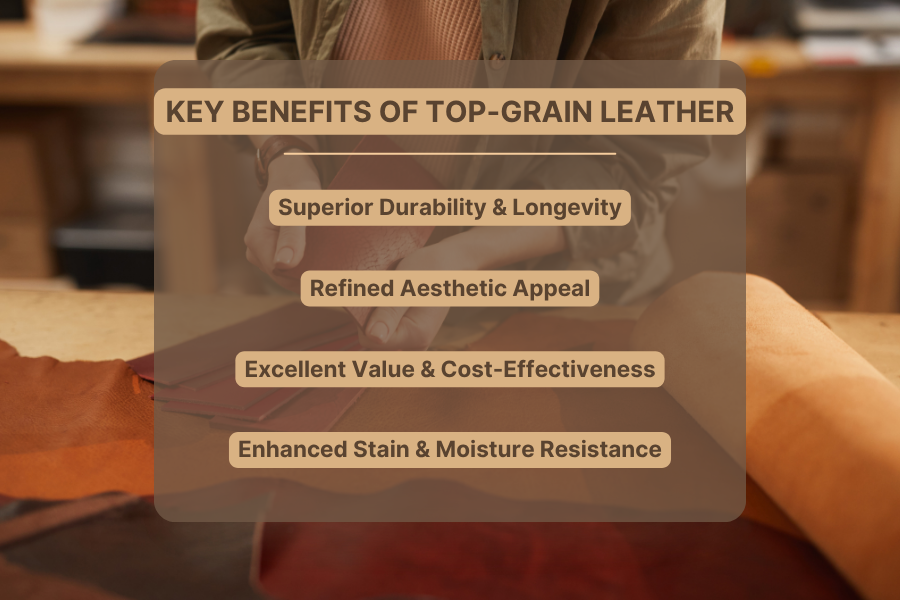
The top-grain leather benefits include:
Superior Durability & Longevity
While not quite as rugged as full-grain, its source, the dense top layer of the hide, gives it a strong fiber structure that resists everyday wear and tear, ensuring products like handbags, furniture, and belts last for years.
Refined Aesthetic Appeal
Top-grain leather undergoes a light buffing and finishing process that removes natural imperfections, enhancing its appearance.
This results in a smooth, uniform, and consistent surface, providing a clean and sophisticated appearance.
Excellent Value & Cost-Effectiveness
You get a premium, luxurious material without the premium cost of full-grain’s untouched, natural hide, making it an exceptionally smart and cost-effective choice.
Enhanced Stain & Moisture Resistance
The protective finish applied to top-grain leather creates a barrier against spills and stains. This makes it a top choice for family homes, frequently used items, and environments where spills are a concern.
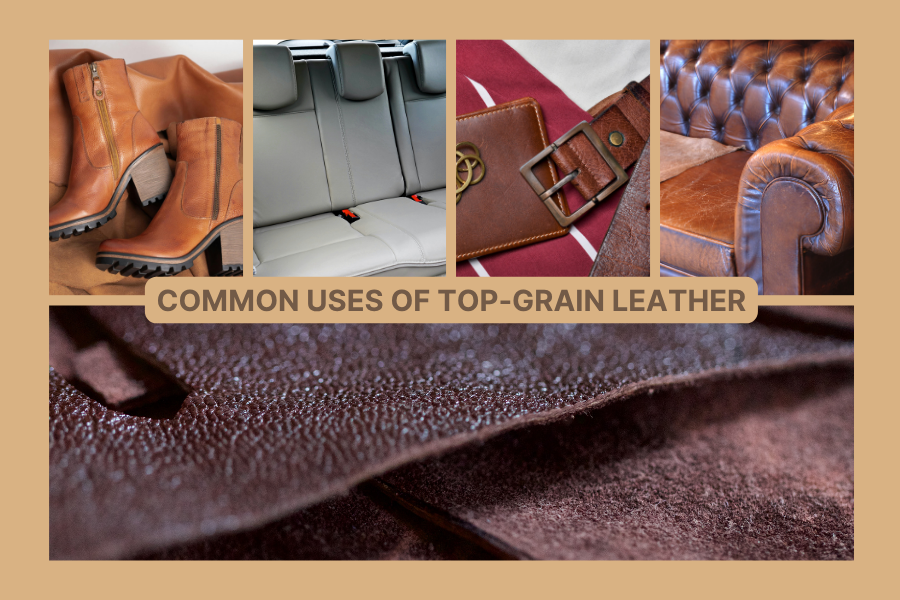
Common Uses of Top-Grain Leather
Top-grain is one of the most versatile leathers on the market. It is the material of choice for a wide range of products where a balance of luxury, practicality, and cost is essential.
Here are some of the most common top-grain leather applications:
Furniture / Upholstery
Top-grain leather is frequently used in sofas, chairs, ottomans, and other upholstery pieces.
The smooth, uniform surface resists stains and wear, making it a practical and elegant option for high-traffic rooms.
Fashion Accessories
Bags, wallets, belts, and shoes often employ top‐grain leather. Its texture allows for high-quality finishes and a polished look, while still being strong enough for everyday use.
Apparel/Clothing
Items such as leather jackets, gloves, and sometimes pants are made from top-grain leather. The treated surface provides a softness and smoother texture, enhancing comfort and appeal.
Automotive Interiors
Car seats, steering wheels, dashboards, and interior trim in both mid-range and luxury vehicles use top-grain leather.
Its stain resistance, durability, and upscale aesthetic make it ideal for areas where wear and exposure (such as sunlight and friction) are significant factors.
Home Furnishings & Decor
Smaller home items and decorations, such as leather panels, ottomans, and pillows, also leverage the look and feel of top-grain leather.
Designers sometimes use it for accents and finishing touches because it adds warmth, elegance, and a premium feel without the cost of full-grain.
That versatility means it’s a strong choice whether you’re buying for a home, for fashion, or for automotive use.
Is Top-Grain Leather Durable?
Because it is made from the upper layers of the hide, it retains much of the leather’s natural strength while having a refined finish that resists everyday wear and tear.
Compared to genuine leather, top-grain leather is far more durable and resistant to cracking, fading, or stretching. Its lightly sanded surface also helps protect against minor scratches and stains, making it ideal for everyday use.
With these qualities, top-grain leather is widely used in premium furniture, handbags, and automotive interiors, where both style and longevity are important.
Moreover, its ability to combine softness with strength makes it a popular choice for those seeking a balance between elegance and endurance.
Top-Grain Leather Care Tips
Top-grain leather looks great and lasts a long time when properly cared for.
Regular care keeps the surface soft, prevents cracking, and preserves the finish, so your furniture, bag, or jacket stays usable and attractive for years.
Here are some tips to keep your top-grain leather looking at its best:
Dust & Wipe Regularly
Use a soft, dry cloth or a soft brush once a week to remove dust and grit. This prevents dirt from abrading the finish, keeping the leather looking fresh and clean.
Clean Spills Immediately
If something spills, gently blot with a clean cloth to lift the liquid. Rubbing can push the stain deeper or damage the finish.
Periodic Cleaning With Mild Cleaner
Every 3–6 months, clean with a pH-balanced leather cleaner or mild soap diluted in water. Apply lightly with a soft cloth, then wipe away any residue and let it air dry.
Keep it Supple With Conditioner
Apply a leather conditioner every 6–12 months (or more frequently in dry climates) to replenish oils. Conditioning prevents drying and cracking, but avoid over-conditioning, as a thin layer is sufficient.
Test Products First
Always test any cleaner or conditioner on an inconspicuous area before applying it to the entire piece. This avoids surprises, such as color changes or finish damage.
Keep Away From Direct Heat
Avoid placing leather in direct sunlight or near heaters for extended periods. Heat and UV cause fading, drying, and premature cracking.
Protect From Sharp Object
Avoid sharp keys, studs, or pet claws on leather surfaces. Small cuts and punctures are hard to repair cleanly in finished leather.
Use Protective Spray
Water-repellent or stain-resistant sprays can help protect high-use items, and follow the manufacturer’s guidance. Don’t rely on sprays alone; they supplement cleaning and conditioning, not replace them.
Rotate Cushions & Use Covers
For furniture, rotate cushions to even out wear and consider throws in heavy-use areas. This reduces stress on single spots and helps leather age evenly.
Seek Professional Help
A leather professional is best equipped to handle tough stains, deep scratches, or structural damage. Also, they can restore the finish or perform color touch-ups without exacerbating the issue.
Frequently Asked Questions
What is top-grain leather?
Top-grain leather is real leather made from the outer (top) layer of an animal hide. The surface is lightly sanded or buffed to remove scars and blemishes, then dyed and sealed with protective finishes. That process gives it a smooth, soft feel and a more even look than full-grain leather, while keeping much of the hide’s strength.
How does top-grain leather compare to full-grain leather?
Full-grain leather is the highest grade,, and it keeps the hide’s natural surface intact, so it’s the most durable, develops a rich patina with age, and shows the hide’s pores and natural markings; top-grain leather, by contrast, is lightly sanded and finished to remove flaws, giving a softer, more uniform look and feel. Full-grain ages beautifully and resists wear the best, but it’s pricier and shows more natural variation. Top-grain trades a bit of that raw character and ultimate longevity for a smoother appearance, easier maintenance, and a lower cost, making it a popular, practical choice for furniture, bags, and automotive interiors.
Is top-grain leather better than genuine leather?
Yes, top-grain leather is better than genuine leather. Top-grain comes from the stronger upper layer of the hide, is sanded and finished for a smoother look, and is more durable, more stain-resistant, and nicer to the touch. That said, genuine leather is still real leather and can be a decent, lower-cost option for budget products or items that won’t see heavy use. If you want a longer life, a nicer feel, and easier maintenance, choose top-grain leather; pick genuine leather only when cost is the primary concern.
What are the main uses of top-grain leather?
Top-grain leather is used in a wide range of high-quality and durable products. Key uses include:
Furniture (sofas, chairs, ottomans): Smooth, durable finish makes it ideal for high-use seating that needs to look good and be easy to clean.
Fashion jackets: Soft hand and polished look give jackets a refined feel while still standing up to everyday wear.
Handbags & wallets: Hold their shape well, take dye evenly, and resist stains, making them perfect for long-lasting accessories.
Shoes & belts: A strong middle layer and finished surface provide a balance of comfort, durability, and style.
Automotive interiors (seats, steering wheels, trim): Offers a premium look, good wear resistance, and easier maintenance than lower-grade leathers.
Luggage & travel bags: Durable and attractive, they also tolerate the travel environment while keeping a polished appearance.
Small leather goods (cardholders, watch straps, phone cases): Smooth texture and clean edges make for neat, long-lasting small items.
Commercial upholstery (office furniture, restaurant seating): Tough enough for heavy use while maintaining a uniform, professional look.
Home decor accents (pillows, panels, ottoman tops): Adds warmth and luxury to interiors without the higher cost of full-grain leather.
Specialty goods (briefcases, instrument cases, some footwear uppers): Used where a refined finish plus reliable performance is required.
How long does top-grain leather last?
With normal care, top-grain leather typically lasts 10–20 years or longer, depending on its use. For items with heavy daily use, the lifespan is typically 5–15 years, depending on the quality and level of care. Mostly, it depends on the hide quality, how it’s finished, construction (stitching, linings), and the environment, such as sun, heat, or moisture, which can shorten its life, while regular cleaning and conditioning extend it. Additionally, it is more durable than lower-grade genuine leather. While it may not age as long or develop as deep a patina as full-grain, it offers a reliable, long-lasting balance of strength and a refined appearance.
How do I clean and care for top-grain leather?
Clean top-grain leather with simple, gentle care, considering the following tips:
Dust regularly: Use a soft, dry cloth to wipe away dirt gently.
Blot spills immediately: Don’t rub and gently lift the liquid with a clean cloth.
Clean occasionally: Use a mild, pH-balanced leather cleaner every 3–6 months to maintain the leather’s condition.
Condition twice a year: Apply a quality leather conditioner to keep it soft and prevent cracks.
Avoid heat and sunlight: Keep away from direct sunlight or heat to prevent fading.
Handle stains carefully: For tough stains or damage, consider seeking professional leather cleaning assistance.
Conclusion
Now that you know what is top-grain leather and how it compares to other grades, it’s clear why many choose it.
It offers a strong balance of durability, great looks, and affordability. While not quite as durable as full-grain leather, top-grain leather still offers a long lifespan, a refined texture, and reliable resistance to wear and stains.
Moreover, top-grain leather delivers much of the premium feel you’d expect, such as a smooth finish, easier maintenance, and a stylish appearance, all at a lower cost than full-grain.
Due to all this, investing in top-grain leather products is a wise decision.
You get something that looks luxurious, performs well over time, and doesn’t come with the very high price tag of full-grain leather.
Importantly, if you care about quality, value, and lasting appeal, top-grain leather is a choice that delivers.
-


Brick Red Leather Bomber Jacket
Original price was: $ 200.$ 170Current price is: $ 170. -

City Explorer Blue Leather Bomber Jacket
Original price was: $ 200.$ 170Current price is: $ 170. -


Metro Stripe White Leather Bomber Jacket
Original price was: $ 200.$ 170Current price is: $ 170. -


Sentinel Gray Leather Bomber Jacket
Original price was: $ 200.$ 170Current price is: $ 170.